Dendrophryniscus leucomystax: A Jewel of Brazil’s Atlantic Rainforest#
Hidden amidst the lush tapestry of Brazil’s Atlantic rainforest, nestled among moss-covered logs and shrouded under the shadows of towering canopy trees, thrives one of nature’s smallest puzzles—the elusive Dendrophryniscus leucomystax. Known commonly as the white-lipped dwarf toad, this diminutive amphibian manages to captivate wildlife enthusiasts and scientists alike with its enchanting appearance and mystical habits. Despite its tiny size, merely a pea resting upon the jungle floor, this fascinating creature carries profound significance both ecologically and scientifically.
To encounter Dendrophryniscus leucomystax in its natural environment is a rare privilege. Its shy disposition, remarkable camouflage, and preference for dense rainforest understories make sightings precious moments to savor. But beyond mere fascination lies a deeper story—one of delicate ecological balance, evolutionary uniqueness, and the urgent need for conservation within a landscape increasingly threatened by human pressures.
Taxonomy and Classification#
Dendrophryniscus leucomystax belongs to the Bufonidae family, known commonly as the true toads. Yet, despite its familial association, this amphibian diverges distinctly from stereotypes associated with typical “toads.” The genus Dendrophryniscus encompasses a group of dwarf tree and leaf litter toads exhibiting arboreal or semi-arboreal tendencies, distinguishing them sharply from their terrestrial and larger-bodied cousins.
The scientific name, Dendrophryniscus leucomystax, holds subtle poetry within its Latin origin, literally translating to “white-lipped tree-toad.” The defining white marking on its upper lip serves as a trademark signature, making identification of this species possible even amongst the surrounding clutter of leaves and debris.
Closely related and sympatric species within the genus include Dendrophryniscus brevipollicatus and Dendrophryniscus minutus, each exhibiting similar diminutive forms and subtle ecological specialization. However, leucomystax distinguishes itself through nuanced behaviors and slight morphological variations, offering tantalizing mysteries for herpetologists eager to decipher evolutionary implications within these closely related species.
Natural Habitat#
Dendrophryniscus leucomystax is endemic to eastern Brazil, primarily inhabiting the rich moisture of the Atlantic Forest biome. This unique rainforest habitat, extending from Brazil’s northeast coast southwards along slopes facing the Atlantic Ocean, provides an ideal microclimate of persistent humidity, dense vegetation, and abundant rainfall.
An Amphibian’s Paradise#
This dwarf toad favors highly specific microhabitats within the forest—typically found hidden under decomposing logs, amidst leaf litter, or occasionally clinging to the trunks of moss-covered trees. Such locations offer essential moisture retention, moderate temperatures, and abundant micro-insects, creating a veritable paradise for a small amphibian reliant upon damp conditions and sheltered environments.
Its habitat preference is not merely a whimsical choice but an evolutionary imperative. The high-humidity conditions essential to the survival of its delicate skin and larvae restrict the distribution of the species to pockets of habitat with precise climatic conditions. Maintaining intact rainforest ecological corridors thus emerges as a critical component in the conservation narrative of Dendrophryniscus leucomystax.
Physical Characteristics#
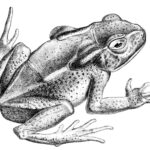
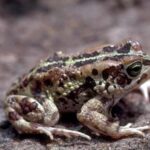
Measuring only about 15-20 millimeters in length, the white-lipped dwarf toad is astonishingly small—barely larger than a thumbnail. Its body is compact and stocky, with short, slender limbs adapted for precise movement in the secluded corners of the forest floor. Yet, what this species lacks in size it compensates for in striking color patterns.
The dorsal surface exhibits intricate blends of browns, deep greens, and olive hues, broken by darker irregular patches that provide near-perfect camouflage amidst forest debris. Its namesake white lip contrasts beautifully against its otherwise cryptic coloration, a subtle flourish of nature and an elegant adaptation helping distinguish individuals from closely related species.
Prominent eyes protrude gently from its head, large relative to its minuscule proportions, allowing exceptional vision crucial for navigating the dimly lit forest understory and swiftly identifying small insects upon which it preys. Its skin, textured with granular bumps and slightly rough surface, enhances moisture retention and provides added camouflage through subtle mimicry of surfaces like bark and decomposing logs.
Behavior and Life Cycle#
While its visual charms quickly capture attention, the intricate behaviors and life cycles of Dendrophryniscus leucomystax amplify fascination. From their silent foraging beneath verdant foliage to their discreet courtship rituals, these tiny amphibians weave quiet dramas essential to sustaining their population.
Stealthy Predators on Forest Floors#
Rarely venturing far from cover, this shy toad preys upon tiny arthropods and insects, including ants, mites, and tiny beetles that roam the rainforest floor. Due to their minuscule dimensions, feeding occurs through patient stalking followed by quick, precise lunges of their sticky tongues. Such stealth demands remarkable patience and concentration, traits perfected by millions of years of evolution within lush, complex micro-ecosystems.
Courtship Under Cover of Rain#
Breeding times typically correlate closely with seasonal periods of heavy rainfall, facilitating more suitable environments for egg survival and larval development. Male Dendrophryniscus leucomystax engage in subtle yet whimsical vocalizations—soft, staccato-like calls rarely audible beyond a meter—inviting females toward carefully selected safe havens beneath moist leaves, logs, or near ephemeral pools.
Following mating, females carefully deposit clusters of eggs within damp protected shelters or shallow water pockets, reducing exposure to predators and environmental fluctuations. Tadpoles typically hatch within days, undergoing rapid metamorphosis to minimize vulnerability during this delicate early life stage. The swiftness of their development is a necessary adaptation, allowing the species to persist even amid fleeting opportunities presented by ephemeral rainforest pools.
Ecological Role#
Despite their diminutive stature, white-lipped dwarf toads play significant ecological roles. As active insectivores, these tiny amphibians help regulate invertebrate populations, maintaining balance within crucial leaf litter ecosystems. Their modest presence contributes greatly to nutrient cycling processes, as feeding and digestion result in the redistribution of critical nutrients back into rainforest soils—sustaining plant diversity and growth.
Additionally, their sensitivity to environmental changes serves as an invaluable bioindicator, alerting conservationists to underlying ecological stress or impending ecosystem collapse long before larger species reveal signs of struggle. Monitoring Dendrophryniscus leucomystax populations thereby fulfills important conservation goals, empowering proactive responses before biodiversity loss becomes irreversible.
Threats and Conservation Status#
Currently listed by the IUCN Red List as of “Least Concern,” Dendrophryniscus leucomystax nevertheless faces concerning threats, predominantly from habitat fragmentation, deforestation, and climate shifts altering rainfall patterns vital for successful reproduction. Brazil’s Atlantic Forest represents one of the planet’s most imperiled ecosystems, continually threatened by human activities including agriculture, urbanization, logging, and road-building.
The loss and fragmentation of the species’ critical habitats severely impact their ability to disperse, find mates, and sustain genetic diversity necessary for long-term survival. Additionally, shifts in rainfall and temperature patterns impede reproductive cycles, larval development, and ultimately, species resilience. Thus, maintaining connectivity and ecological integrity within remaining Atlantic Rainforest territories emerges as an urgent conservation priority.
Cultural and Scientific Significance#
Beyond ecological implications, Dendrophryniscus leucomystax holds cultural resonance among indigenous communities inhabiting Brazil’s rainforests. Symbolizing humility, subtlety, and harmony within the ecosystem, local folklore attributes poetic meanings to this humble amphibian, reminding observers subtly of interconnectedness within nature.
From a scientific viewpoint, the species represents a model organism perfectly suited to understanding broader ecological questions—including adaptation to microhabitats, amphibian resilience under climate stressors, and rainforest ecosystem functioning. Each tiny discovery collected about this delicate amphibian assists scientists in painting a larger picture necessary for global biodiversity protection.
Conclusion: Conserving the Tiny Guardians of the Forest#
Dendrophryniscus leucomystax represents far more than an extraordinary biological curiosity. Its silent, persistent existence within Brazil’s threatened Atlantic forests symbolizes the intricate relationships binding all living beings—not just charismatic megafauna—to the ecosystems they inhabit. Protecting this species means safeguarding its habitats and, perhaps more importantly, elevating our commitment to preserving Earth’s immense biodiversity.
Join conservation movements that strive relentlessly to protect critical habitats and nature’s hidden gems. Embrace environmental stewardship, fuel curiosity, and promote awareness by sharing their delicate stories. Ultimately, how we safeguard tiny creatures like the white-lipped dwarf toad shapes the future of all life on this beautiful yet vulnerable planet.