- Dendrophryniscus lauroi: Unveiling the Secrets of Brazil's Jewel-like Toadlet
- Taxonomy and Classification: Understanding <em>Dendrophryniscus lauroi</em>
- Natural Habitat: The Hidden World Within Brazil's Atlantic Forest
- Physical Characteristics: A Vividly Colorful Forest Gem
- Behavior and Life Cycle: Secret Lives in the Forest Shadows
- Ecological Role: Vital Threads in the Forest Tapestry
- Threats and Conservation Status: Protecting What Remains
- Cultural and Scientific Significance: A Symbol of Biodiversity and Discovery
- Conclusion: Together, Safeguarding a Forest Treasure
Dendrophryniscus lauroi: Unveiling the Secrets of Brazil’s Jewel-like Toadlet#
Hidden within the lush tapestry of Brazil’s Atlantic Rainforest, a tiny amphibian spends its days perched inconspicuously among moss-covered rocks and moist leaf litter. At first glance, one might overlook this delicate creature entirely. Yet, upon closer inspection, its vivid colors and striking patterns—splashes of fiery reds, deep blacks, and radiant oranges blending harmoniously atop its small frame—give it away as one of nature’s masterpieces. Meet Dendrophryniscus lauroi, the beautifully enigmatic Laurito’s tree toad.
Neither widely known nor commonly observed, this small amphibian is one of the countless hidden treasures embedded deep within Brazil’s flourishing ecosystems. Though small in size and secretive in behavior, this colorful toadlet plays an essential role in forest ecosystems, embodying a remarkable blend of adaptation, resilience, and biodiversity. Together, we’ll journey deep into the wet forests of southeastern Brazil, gently parting ferns and peering into shadows, to better understand the remarkable life of Dendrophryniscus lauroi, its habitat, unique behavioral traits, ecological importance, and the very real threats this amphibian faces amid environmental change and habitat loss.
Taxonomy and Classification: Understanding Dendrophryniscus lauroi#
Dendrophryniscus lauroi, known commonly as Laurito’s tree toad or Laurito’s toadlet, belongs within the diverse family Bufonidae. This family groups together an extensive range of species typically called “true toads,” many of which convey toxic skin secretions as a critical defensive measure. Within Bufonidae, Dendrophryniscus is a smaller, highly specialized genus, often associated with particular microhabitats in Brazil’s Atlantic Rainforest.
In recent years, increasing molecular data and taxonomic reassessments have shone new light on the relationships among bufonids. Despite its small size and secretive lifestyle, D. lauroi has attracted interest from taxonomists who endeavor to better define species boundaries within this richly diversified genus. Its closest relatives include equally colorful toadlets, like Dendrophryniscus brevipollicatus and Dendrophryniscus minutus, each evolved to occupy similarly specialized forest niches. Yet even among these fascinating relations, Laurito’s tree toad retains a distinctive charm and ecological niche all its own.
Natural Habitat: The Hidden World Within Brazil’s Atlantic Forest#
The natural home of Dendrophryniscus lauroi is ensconced deeply within Brazil’s Atlantic Forest, one of Earth’s richest biodiversity hotspots yet among its most endangered biomes. Found primarily within southeastern Brazil, notably within protected areas of São Paulo State, this species resides in humid, shaded rainforest habitats where moisture drips perpetually from lush vegetation, rocks gleam with slick mosses, and the air resonates with the persistent calls of countless birds and amphibians.
Unlike tree frogs that frequent lofty canopies or bullfrogs that prefer aquatic habitats, D. lauroi is particularly adapted to terrestrial, humid microhabitats. It finds refuge within leaf litter, concealed by low, moss-covered rocks and under decaying logs. The microclimate here—cool, shaded, and consistently damp—offers ideal conditions for its delicate skin, which requires a constant moist environment to aid in respiration and hydration.
The frog’s distribution is patchy, tied intimately to the availability and quality of remaining forests. Within these habitats, subtle variations in terrain, moisture levels, moss cover, and leaf litter depth profoundly influence population density and distribution. A seemingly negligible change in humidity or rainfall pattern can significantly disrupt populations of these sensitive amphibians. Thus, Dendrophryniscus lauroi not only embodies the delicate beauty of forest biodiversity but also serves as an environmental sentinel, indicative of the health and vitality of the Atlantic Forest itself.
Physical Characteristics: A Vividly Colorful Forest Gem#
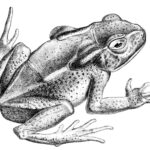
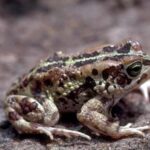
At first glance, Laurito’s tree toad charms observers with its vibrant color palette, displaying a mosaic of striking reds, oranges, blacks, and browns. Its small stature—measuring typically between just 15 and 20 millimeters from snout to vent—further reinforces its deceptive appearance as a delicate jewel rather than a hardy forest dweller.
Perhaps the most remarkable feature is its skin coloration. Brightly hued, these vibrant colors act as aposematic, or warning signals, alerting potential predators to the toxic chemicals secreted by specialized glands in their skin. Isolated glands scattered across the surface of their skin produce toxins that deter would-be predators, an evolutionary adaptation crucially beneficial within forests teeming with birds, lizards, and rodents. The vivid patterns not only ensure survival through deterrence but have also inspired observational research into the diverse mechanisms through which coloration and toxicity co-evolve in amphibians.
The small limbs of D. lauroi are specially adapted to navigate the uneven floor of its forest habitat. Slender toes bear slight terminals, lending them needed agility for traversing damp moss, leaf litter, and wet logs. Eyes positioned prominently upon their rounded head afford wide visual coverage, crucial for predator avoidance and prey pursuit while navigating their shadowy micro-world.
Behavior and Life Cycle: Secret Lives in the Forest Shadows#
A Quiet Hunter Beneath the Mossy Shade#
Elusive and nocturnal, Laurito’s tree toad spends daylight hours concealed within the shade of foliage, emerging only under the cover of darkness to feed. Its diet consists primarily of small invertebrates—ants, mites, tiny beetles, and spiders—readily available within its microhabitat. Hunting primarily through ambushing tactics, this amphibian patiently awaits prey, using its remarkable vision and tactile senses to strike swiftly with its adhesive tongue.
Gentle Calls and the Art of Courtship#
During the humid and rainy seasons, the male Dendrophryniscus lauroi emerges to engage in the species’ subtle courtship rituals. Unlike the loud choruses of their pond-breeding counterparts, Laurito’s toadlets communicate with soft, rhythmic clicking and trilling calls that echo faintly in their leaf-littered habitat. Though this subdued communication complicates survey and monitoring activities, it suits their clandestine lifestyle perfectly.
Females, attracted by trials of these gentle songs and chemical pheromones, select mates and subsequently lay their fertilized eggs in hidden, damp locations—the interiors of decomposing logs or pockets of moist leaf litter. Parental care is limited, yet careful placement of eggs ensures high humidity and favorable conditions for embryonic maturation, giving offspring their best chance of survival within the dense forest’s uncertainties.
Ecological Role: Vital Threads in the Forest Tapestry#
Despite their diminutive size, these tiny amphibians shoulder outsized ecological significance. Consuming vast numbers of tiny invertebrates, Laurito’s tree toads help regulate populations of insects and arachnids within the forest floor. Simultaneously, they serve as essential prey for a variety of forest-dwelling predators, from birds to larger amphibians, snakes, and small mammals, underscoring their centrality in nutrient cycling and food web dynamics.
Perhaps most crucially, their sensitivity to environmental disturbance positions them as critical bioindicators. Decreases in their populations often signal underlying ecological issues, such as habitat fragmentation or climate stressors.
Threats and Conservation Status: Protecting What Remains#
Unfortunately, the very habitat upon which Dendrophryniscus lauroi depends remains perilously vulnerable. Deforestation, habitat fragmentation resulting from agriculture, urbanization, and infrastructure development drastically reduce available habitats and connectivity between amphibian populations. Coupled with global climate change altering rainfall patterns and humidity levels, these threats could exacerbate population declines.
Currently assessed by the International Union for Conservation of Nature (IUCN) as Data Deficient, this implicates a pressing need for ongoing dedicated research and monitoring. Conservation efforts, therefore, prioritize habitat protection, restoration projects, creating connectivity corridors, and increasing awareness regarding amphibian conservation.
Cultural and Scientific Significance: A Symbol of Biodiversity and Discovery#
While not widely recognized culturally, Dendrophryniscus lauroi symbolizes the quieter side of biological richness in Atlantic Rainforests, representing the sheer diversity and uniqueness that can thrive in seemingly inconspicuous corners. Scientifically, it represents an important window into amphibian adaptations, aposematic evolution, and environmental health indicators.
Conclusion: Together, Safeguarding a Forest Treasure#
Laurito’s tree toad reminds us of life’s hidden jewels. By embracing curiosity, investing in research, and preserving habitats, we steward not just one remarkable species but the integrity of an entire ecosystem. Let the vibrant story of Dendrophryniscus lauroi inspire us all to stand together in preserving Brazil’s Atlantic Forest and the marvelous life woven intricately within its depths.