- Dendrophryniscus jureia: The Hidden Jewel of Brazil's Atlantic Rainforest
- Taxonomy and Classification: Deciphering the Leaf Toad's Origins
- The Juréia-Itatins: A Precious Habitat Steeped in Mystery
- Physical Characteristics: A Masterpiece in Miniature
- The Secret Lives of Juréia Leaf Toads: Behavior and Life Cycle
- An Ecological Connection: Understanding Their Role
- Threats and Conservation: Safeguarding the Tiny Guardians
- Cultural and Scientific Significance
- Conclusion: A Call to Protect Our Shared Natural Heritage
Dendrophryniscus jureia: The Hidden Jewel of Brazil’s Atlantic Rainforest#
In the lush, rain-soaked forests nestled within Brazil’s Atlantic coast lies a tiny amphibian whose quiet existence belies its extraordinary ecological importance and scientific intrigue. Dendrophryniscus jureia, affectionately known among herpetologists and local enthusiasts as the Juréia leaf toad, appears scarcely larger than a thumbnail and often remains obscured beneath a canopy of humidity-soaked vegetation. Their humble appearance, however, masks a fascinating biology and a critical role within one of Earth’s most threatened ecosystems.
Rarely does a creature so diminutive command attention from conservationists, scientists, and nature lovers alike. Yet, the Juréia leaf toad does just that. Far from ordinary, its existence is intricately woven into the fabric of the Atlantic Forest, a biodiversity hotspot marked by both astounding species richness and alarming vulnerability. As inhabitants of this unique and fragile biome, these tiny amphibians symbolize the ecological complexity found within Brazil’s diminishing wilds.
But what makes Dendrophryniscus jureia particularly remarkable isn’t merely its small stature or cryptic lifestyle. Rather, it is a blend of specialized adaptation, subtle yet striking coloration, and vital ecological interactions that afford us a profound glimpse into nature’s interconnected webs. Join me as we journey into the secretive lives of these intriguing amphibians—guiding you through their biology, habitat, and conservation, and unraveling why retaining their habitat safeguards not only their future, but ours as well.
Taxonomy and Classification: Deciphering the Leaf Toad’s Origins#
Dendrophryniscus jureia, belonging to the family Bufonidae—the true toads—is closely linked with a fascinating cluster of relatively small-sized, forest-dwelling amphibians. Within Bufonidae, the genus Dendrophryniscus stands apart, characterized by species adapted explicitly to humid, forested habitats rather than the arid or moist open lands typically favored by their common relatives.
The genus name Dendrophryniscus etched itself into taxonomy from Greek and Latin roots—’Dendro,’ meaning ‘tree’ and ‘phryniscus’ derived from ‘phrynos’ or ‘toad,’ symbolically placing these creatures in verdant forest environments. This taxonomic positioning underscores their unique evolutionary trajectory, which specialized them for life amid tangled branches, fallen leaves, and dripping foliage rather than open ground.
The species name ‘jureia’ pays homage to the Juréia-Itatins Ecological Station, an internationally recognized conservation area and the heart of this toad’s known range. First formally described scientifically in 2010 by researchers Cruz, Caramaschi, and Napoli, it stands as a testament to the importance of continued scientific exploration and field research in Brazil’s vast biodiversity.
The Juréia-Itatins: A Precious Habitat Steeped in Mystery#
Situated within the verdant stretches of the Atlantic Rainforest in southeast Brazil, the Juréia-Itatins Ecological Station provides a sanctuary for the Juréia leaf toad. Here, sprawling foothills draped in dense evergreen forest rise sharply from the shoreline, giving way to mist-shrouded peaks and crystal-clear streams that wind downward through moss-covered stones and ferns. The leaf litter blanketing the forest floor becomes a haven for amphibian life, presenting the ideal moisture and coverage critical for their survival.
The Atlantic Forest biome, despite being enormously diverse, faces persistent pressures from extensive deforestation, urban encroachment, and climate change. Within this shrinking paradise, Dendrophryniscus jureia thrives primarily in pristine lowland tropical forests near freshwater streams or temporarily flooded areas. The presence of slow-moving rivulets and leaf-banked pools supplies vital breeding sites and foraging grounds.
It’s precisely in these damp, moss-covered niches, shaded from sunlight yet saturated with life, that Juréia leaf toads flourish. Moisture and humidity are lifelines to their permeable skin, making their habitat choice non-negotiable for survival. Within this moisture-rich context, Dendrophryniscus jureia conducts its entire lifecycle, from egg development to adulthood, in close harmony with its environment.
Physical Characteristics: A Masterpiece in Miniature#
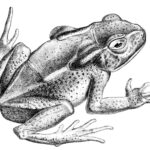
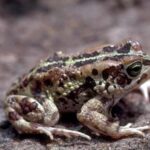
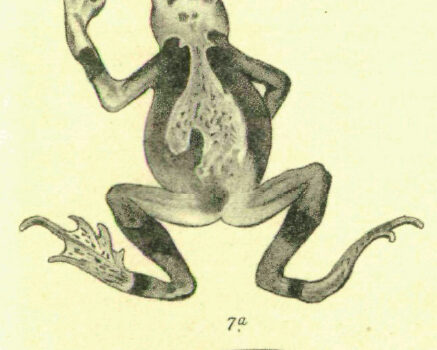
At first glance, the Juréia leaf toad can easily be overlooked. Adults rarely exceed 25 millimeters in length, their small bodies dwarfed by surrounding foliage. Yet, upon closer examination, this humble amphibian is captivatingly complex. They display finely patterned skin coloration—mottled combinations of brown, dull yellow, and even deep reddish hues expertly blend the frogs into the damp leaves and tangled roots surrounding their habitat.
Their slightly bumpy, grainy skin texture aids in camouflage, resembling the protective colors and patterns commonly seen among ground debris. Such adaptive coloration is vital, as any inattentiveness may render these toads easy targets for opportunistic predators passing through the forest’s understory.
While not brightly or conspicuously colored, subtle adaptations are clear—protruding eyes positioned strategically to sense movements, extended forelimbs to maneuver carefully across the slippery leaf-laden landscape, and hind legs designed for swift, effortless hopping from leaf to leaf. Every physical feature we observe clearly serves a purpose: survival through elegance rather than flamboyance.
The Secret Lives of Juréia Leaf Toads: Behavior and Life Cycle#
Dendrophryniscus jureia lives an unassuming yet finely tuned ecological existence. Preferring the quietude of dimly lit forest floors and leaf-strewn edges of jungle streams, it remains largely active at night. Under the cover of darkness, tiny arthropods including mites, springtails, ants, and small beetles fall prey to the toad’s precise, swift moves, becoming integral meals in their dietary repertoire.
When rainfall initiates breeding season, males announce their presence with gentle, incessant calls—short, melodious notes—echoing softly through the night air. Rival males compete vocally to attract receptive females near shallow pools or streams, carefully concealed beneath the forest leaf litter. After successful pairing, females deposit clusters of minuscule eggs in moist substrates, nestled safely among decaying leaves.
The eggs hatch into tadpoles that dwell within small pools or shallow puddles, feeding mainly on organic detritus and algae. Unlike some frog species that deposit eggs in open, sunlit waters, Juréia leaf toads have evolved to exploit a perpetually damp forest floor and secluded freshwater habitats, away from larger predators.
An Ecological Connection: Understanding Their Role#
Small though they might be, these leaf toads hold a great ecological significance. As predators of tiny arthropods, they effectively regulate invertebrate populations, ensuring a healthy biodiversity balance within their specific microhabitat. Likewise, they themselves become sustenance for small predators, including birds, small snakes, and even predatory insects, contributing essential nutrients through the food web.
Moreover, amphibians like Dendrophryniscus jureia act as essential bioindicators—serving scientists as live sentinels, revealing the health of their remote ecosystems. Their permeable skin and dependence on highly specialized microhabitats make them particularly sensitive to environmental disturbances such as pollution, climate shifts, and deforestation.
Threats and Conservation: Safeguarding the Tiny Guardians#
Despite their secretive ways, Juréia leaf toads are deeply vulnerable. Their exclusive reliance on pristine habitats makes their populations highly susceptible to ecosystem disruptions. Habitat loss and fragmentation driven primarily by deforestation, agricultural expansion, logging, and human encroachment constitute immediate threats.
While the IUCN currently classifies Dendrophryniscus jureia as Data Deficient due to limited information, researchers and conservationists wisely stress precaution and proactive habitat protection to preserve this unique species. Initiatives to safeguard the Juréia-Itatins Ecological Station habitat from further degradation represent vital conservation steps forward.
Cultural and Scientific Significance#
Even beyond ecology, Dendrophryniscus jureia holds appeal. It symbolizes broader biodiversity conservation, serving as a charismatic ambassador for Brazil’s threatened Atlantic Forest ecosystem. For scientists, it represents a living testament to amphibian adaptability and an inspiration for dedicated research seeking natural wisdom in complex adaptive strategies developed over millions of years.
Conclusion: A Call to Protect Our Shared Natural Heritage#
Though subtle and small, the Juréia leaf toad remains profoundly representative of Earth’s ecological complexity and fragility. Let these tiny amphibian ambassadors guide us toward appreciating and safeguarding the diverse life forms sharing our planet. Together, through awareness, appreciation, and action, we can ensure that the soft evening chorus of gentle croaking continues amidst the healthy, thriving forests—an echoing testament to harmony and coexistence for generations yet to come.