Dendrophryniscus davori: Discovering the Hidden Gem of South America’s Rainforests#
Introduction#
In the dense, vibrant rainforests of South America, hidden beneath layers of leaf litter and blending seamlessly within damp forest floors, dwells a diminutive yet remarkably resilient amphibian known as Dendrophryniscus davori. Commonly called “Davor’s Pygmy Forest Toad,” this recently discovered species embodies the complexity and wonder of South America’s biodiversity. Though modest in size, Dendrophryniscus davori holds significant ecological importance, fulfilling critical roles within its delicate ecosystem and serving as an indicator of environmental health.
Discovered relatively recently in humid habitats deep within Brazil’s Atlantic Forest, this species captivates biologists and nature enthusiasts alike—not only due to its distinctive appearance but also because of its fascinating behaviors and the substantial conservation challenges it faces.
Taxonomy and Classification#
Dendrophryniscus davori belongs to the family Bufonidae, commonly known as true toads. Yet, despite classifications, this tiny amphibian sets itself apart in several ways from the familiar, rough-skinned toads most individuals might encounter elsewhere.
The genus Dendrophryniscus, which literally translates to “tree toadlet,” comprises a small group of diminutive, diurnal toads known primarily for their vibrant coloration and preference for humid, forested microhabitats. Within this genus, Dendrophryniscus davori was officially described to science only recently, underscoring the incredible diversity still hidden away, awaiting discovery within these fast-disappearing habitats.
Closely related to other small forest-dwelling species like Dendrophryniscus brevipollicatus and Dendrophryniscus minutus, this unique amphibian shares many adaptive features that allow survival in its specialized microhabitat.
Natural Habitat#
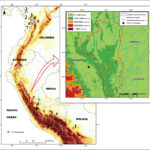
Native exclusively to Brazil’s Atlantic Forest, Dendrophryniscus davori has a limited distribution, concentrated primarily around humid, low-altitude forest remnants along the tropical coastal belt. The Atlantic Forest, also known as Mata Atlântica, is recognized by UNESCO as one of the planet’s biodiversity “hotspots,” famed for its staggering variety of species amidst thickets of dense foliage, vibrant bromeliads, and intricately woven forest canopies.
Beneath the Forest Canopy#
Unlike its tree-living cousin frogs, Dendrophryniscus davori spends most of its time hidden among leaf litter and moist, moss-covered forest floors. These microhabitats offer the crucial humidity and protection these amphibians require to thrive. During wet seasons, gentle rains bathe the forest floor in frequent downpours, creating temporary pools and rivulets essential to its life cycle.
The leaf litter environment is teeming with invertebrate activity, providing abundant prey for these hungry little predators. Their adaptability to living in such precise ecological niches highlights the exquisite specialization of rainforest life.
Physical Characteristics#
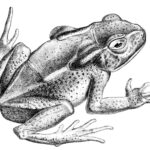
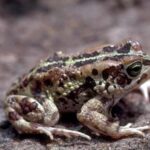
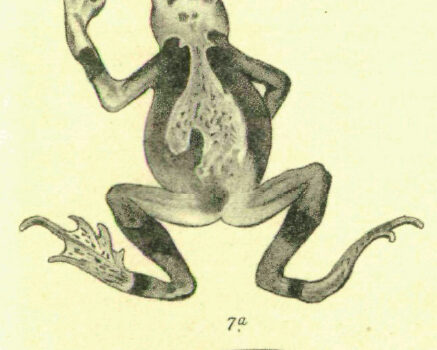
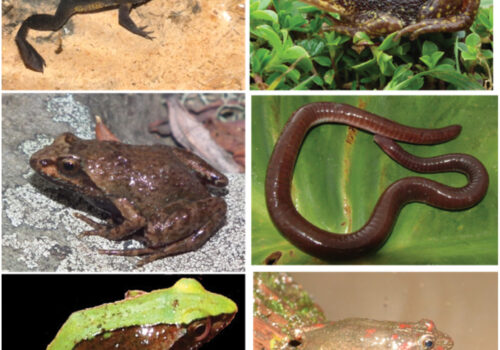
One of the most immediately remarkable aspects of Dendrophryniscus davori is its size—frequently smaller than two centimeters in length—and its striking coloration pattern. Colors span hues such as golden-orange, bright red, deep brown, and rich black, often arranged into cryptic patterns that render it nearly invisible when motionless among fallen leaves and decaying vegetation.
Adaptations for Survival#
The smooth yet moisture-retaining texture of their skin serves dual purposes: assisting with respiration and protecting them against moisture loss. Additionally, vivid colorations significantly contribute as defensive adaptations; in nature, bright coloration often signals toxicity or at least unpleasant flavors, discouraging potential predators from venturing too close.
Beyond aesthetics, their long hind limbs facilitate agile yet subtle movements within dense leaf litter, making rapid escapes possible at the slightest hint of danger. Their large and darkly pigmented eyes teach us about their preferences for dimly lit microhabitats beneath dense understory cover, allowing efficient movement in low-light conditions.
Behavior and Life Cycle#
Dendrophryniscus davori leads an active diurnal life, primarily foraging during early morning hours and evening twilight periods. During daylight hours, individuals persistently search under leaf layers for tiny insects, spiders, ants, and other minuscule arthropods.
Mating and Reproduction#
The rain-soaked months set the stage for their reproductive cycle. Male toads send out delicate, chirping calls, often mistaken by untrained ears for countless insects within the rainforest chorus. Females lay clusters of tiny eggs in moist environments, usually leaf piles or shallow depressions collecting rainwater.
From egg hatching to tadpole emergence, the entire developmental process lasts only a few short weeks. Tadpoles remain in ephemeral pools, feeding primarily on algae, accelerating their growth to avoid drying pools before metamorphosing into adults. This streamlined life cycle mirrors the precarious and rapidly changing conditions within their natural rainforest habitats.
Ecological Role#
The presence of Dendrophryniscus davori serves as a barometer for the overall health of the rainforest ecosystem. Amphibians possess a permeable and sensitive skin surface, making them particularly sensitive to environmental changes. A thriving population suggests an abundance of healthy forest conditions, while declining numbers may signal disturbances such as pollution, disease, habitat loss, or climate shifts.
As petite amphibian predators, these toads play vital roles regulating populations of insects, thus contributing to a balanced food web. Conversely, they’re essential prey species for numerous snakes, birds, and small mammals, anchoring a complex ecological chain sustained by biodiversity.
Threats and Conservation Status#
Despite its recent scientific description, conservationists already regard Dendrophryniscus davori as a species of significant concern due to its limited distribution, specialized habitat requirements, and vulnerability to rapid environmental changes. Habitat loss and fragmentation remain primary threats, fueled by intensive agriculture, logging, urban expansion, and climate-driven alterations to rainfall patterns.
Currently listed as Data Deficient by the IUCN due to limited information, conservationists actively work towards gathering detailed ecological and distributional data to develop robust conservation strategies tailored explicitly for this rare species. Preserving intact tracts of Atlantic Forest ecosystem becomes critical in protecting not just Dendrophryniscus davori, but countless other specialized and endangered flora and fauna.
Cultural and Scientific Significance#
Although relatively unknown in broader cultural terms, the discovery of Dendrophryniscus davori significantly contributes to our scientific understanding of amphibian biodiversity, evolutionary adaptations, and ecosystem functioning. Every newly described species grants invaluable insights into evolution, ecology, and environmental interconnectedness and strengthens advocacy efforts vital in protecting vulnerable ecosystems like Brazil’s threatened Atlantic Forest.
Conclusion#
Dendrophryniscus davori exemplifies the fragile beauty, remarkable evolutionary history, and ecological complexity present within our planet’s rich rainforests. Yet, it also represents all that we might lose to unchecked environmental degradation. By learning and sharing knowledge about such incredible beings, we can collectively foster awareness, understanding, and actionable conservation efforts.
Let us ensure that these vibrant, diminutive creatures remain symbols of biodiversity preservation, speaking volumes about the necessity and urgency of protecting our precious rainforests—not only for Dendrophryniscus davori but also for generations of wildlife and people to come.