The Hidden Life of Capensibufo tradouwi: South Africa’s Rare Mountain Toad#
Nestled deep within the misty folds of South Africa’s mountainous regions lies a remarkably unique amphibian species, quietly living out an extraordinary existence far from the bustling valleys below. Known to scientists and conservationists by its scientific name, Capensibufo tradouwi, this elusive mountain toad remains largely hidden from the general gaze, yet it carries within its small, humble body an ecological significance far exceeding its size. Often overshadowed by the larger, more charismatic wildlife of this iconic landscape, the Tradouw Mountain Toad captivates those who study it, wrapped in mystery, resilience, and intriguing behaviors.
Named after the breathtaking Tradouw Pass region of the Western Cape Province in South Africa—home to sweeping mountain vistas, lush indigenous fynbos, and creeping mists—Capensibufo tradouwi epitomizes the subtle yet profound connection between geography and biology. This article invites you into the hidden corners of their world, unraveling the multifaceted story of this captivating amphibian, from their remarkable adaptations to the conservation challenges they face.
Taxonomy and Classification#
Capensibufo tradouwi, commonly termed the Tradouw Mountain Toad or Tradouw Toadlet, belongs to the family Bufonidae, a group that includes various ‘true toads’ known for their dry, warty skins and terrestrial behaviors. Within Bufonidae, the small genus Capensibufo encompasses a select few species, all endemic to the biodiversity-rich Cape Floristic Region of southern Africa.
Originally described in the mid-20th century by notable herpetologists, the Tradouw Mountain Toad has been the subject of various taxonomic discussions, research studies, and conservation protocols. Its closest relatives—fellow Capensibufo species such as Capensibufo rosei and Capensibufo deceptus—share similar habitats, appearances, and life histories, a testament to their unified evolution alongside the unique climatic and geological tapestry of the Western Cape mountains.
Natural Habitat#
The Tradouw Mountain Toad is a denizen of remarkably specialized habitats nestled within South Africa’s dramatic Cape Fold Mountains. Primarily distributed around the Tradouw Pass and surrounding montane regions, their limited geographic range is both their strength and vulnerability. These mountains, draped in the vibrant greens and greys of indigenous fynbos, serve as the backdrop for their hidden lives, providing ideal conditions for their quietly flourishing populations.
A Habitat Tailored by Time and Geology#
To understand the habitat choices of Capensibufo tradouwi, one must first gaze upon the unique environment: the fynbos biome. Dominated by fine-leafed shrubs, heathers, ericas, proteas, and restios, fynbos is adapted to nutrient-poor soils and Mediterranean climate conditions—winter rainfall and dry summers. The intricate textures of vegetation, alongside rock crevices and small streams trickling from highland springs, compose perfect shelters for these small amphibians.
Unlike many toads that settle near permanent rivers or broad marshlands, Capensibufo tradouwi relies on ephemeral pools and transient wetlands formed by seasonal rainfall. These temporary water bodies offer an advantage—fewer predators—but also present major risks, such as drying out prematurely during drought cycles. Thus, Tradouw toads have evolved incredible resilience and precise breeding strategies, perfectly attuned to their precarious environment.
Physical Characteristics#
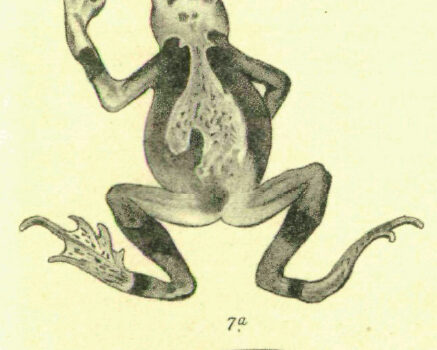
Small yet robust, the Tradouw Mountain Toad rarely exceeds three centimeters in length from snout to vent. Their understated size belies their fascinating complexity, each body part a careful adaptation honed by generations living within a unique ecological niche.
Their coloration is a palette of olive-green, brown, gray, and earthy tones, allowing them to seamlessly blend into the rocky soil, leaf litter, and moss-laden recesses of their montane environment. Irregular darker blotches often adorn their warty skin, further adding to their superb camouflage. Their eyes, small yet expressive, sit prominently atop their head, allowing them a panoramic view of predators, prey, and mates.
Not purely aesthetic, their rough, granular skin serves crucial practical purposes. The texture helps to conserve moisture, essential when dwelling far from permanent water sources, aiding in their survival during the dry months. Their muscular legs, short but powerful, assist in navigating irregular rocky terrain, ensuring easy evasion of local predators such as small birds, snakes, and mammals.
Behavior and Life Cycle#
Life as a tiny amphibian in an unforgiving habitat demands ingenuity and strategy. From hunting minuscule insects to breeding under fleeting ideal conditions, the behaviors of Capensibufo tradouwi reveal subtle dramas unfolding on a miniature stage.
Quiet Hunters of Tiny Prey#
As primarily insectivorous amphibians, Tradouw Mountain Toads feed on small invertebrates: ants, mites, springtails, and beetle larvae. Hunting mainly at dusk and dawn, their feeding rituals unfold quietly, within shady patches beneath vegetation or between rocks. In these microhabitats, quietly concealed from watchful predators, the Tradouw toad sits motionless until prey ventures close enough to be seized by its swift, sticky tongue.
Reproduction and Breeding Rituals#
The reproduction of Capensibufo tradouwi is intricately linked to the seasonal rains. Breeding finds its delicate moment in the brief window following winter rainfall when ephemeral pools scatter the landscape. Male frogs assemble in these temporary pools, producing faint calls rather subtle in volume yet distinct enough among their own kind. These choruses, though softer than the cacophonies of other amphibians, echo gently through the damp mountain air, guiding females to prime breeding grounds.
Females join the pools, carefully choosing suitable mates based upon subtle auditory and visual cues, before laying delicate strings of eggs among submerged vegetation or stones. Within days, tiny tadpoles emerge, swiftly growing and developing as the pools warm. Their accelerated growth is remarkable; tadpoles must complete metamorphosis rapidly, racing against the clock before their temporary homes evaporate entirely. The exciting yet ephemeral nature of their reproduction underscores their vulnerability to climate changes and disruptions in rainfall patterns.
Ecological Role#
Though humble, Capensibufo tradouwi plays an indispensable role within their montane ecosystems. Acting as both predator and prey, these amphibians help regulate the delicate balance of invertebrate species, particularly during breeding seasons when tadpoles consume vast quantities of algae and algae-eating insects.
Simultaneously, they serve as prey for multiple regional predators, including birds, reptiles, and small mammals. Perhaps most importantly, their sensitivity to environmental changes positions them as vital ‘indicator species,’ whose population fluctuations alert scientists to broader ecological shifts or stressors, signaling habitat health or degradation subtly yet reliably.
Threats and Conservation Status#
As with many amphibian species worldwide, Capensibufo tradouwi faces significant threats driven primarily by habitat degradation, climate fluctuations, disease, and invasive species. Currently assessed by the International Union for Conservation of Nature (IUCN) as Vulnerable, the species’ limited range exposes it uniquely to localized dangers, exacerbating their vulnerability.
The increasing irregularity of rainfall patterns, droughts exacerbated by climate change, and shifts in vegetation composition across the Western Cape pose severe challenges to their survival and reproduction. Disease pathogens such as chytrid fungus also present potential threats, though thankfully, no significant outbreak has yet been recorded in this species’ populations.
Active conservation strategies include habitat protection, responsible land-use planning, and scientific monitoring by regional environmental organizations aimed at ensuring that this special little toad continues thriving in its ancestral home.
Cultural and Scientific Significance#
While rarely making headlines or sparking widespread cultural fascination, the Tradouw Mountain Toad encapsulates quiet dignity and resilience, embodying the intimate human-animal relationships often celebrated in traditional lore of mountain communities. Their scientific relevance, however, continues to heighten; as indicators of climate change and ecological shifts within a biodiversity hotspot, they provide scientists essential data insights.
Conclusion: Conserving a Hidden Treasure#
Capensibufo tradouwi is more than just a tiny mountain amphibian; their existence signifies ecological integrity, species resilience, and the interconnected threads woven deeply into South Africa’s mountain ecosystems. Through continued research, awareness, and conservation advocacy, we can ensure the hidden life story of the Tradouw Mountain Toad continues unfolding successfully, celebrated quietly within its cherished mountain landscapes.