- The Secretive Life of Capensibufo rosei: Exploring Rose's Mountain Toad
- Taxonomy and Classification of Capensibufo rosei
- The Natural Habitat of Rose's Mountain Toad
- Physical Characteristics—An Adapted Survivor
- Behaviors, Life Cycle, and Natural History
- A Keystone: Ecological Role of Rose's Mountain Toad
- Threats and Conservation: A Species at the Crossroads
- Cultural and Scientific Significance
- A Call to Action: Protecting Rose's Mountain Toad
The Secretive Life of Capensibufo rosei: Exploring Rose’s Mountain Toad#
Among the mist-covered rocky slopes and fynbos shrublands of South Africa’s Cape Peninsula emerges one of the region’s hidden gems: Rose’s Mountain Toad, scientifically known as Capensibufo rosei. Quiet, elusive, and beautifully adapted to its distinct mountain habitat, this amphibian’s existence remains largely unknown, even to those familiar with the area’s rich biodiversity.
At first glance, this diminutive toad might seem unassuming. Yet, beneath its modest exterior lies a remarkable adaptation, evolved through millennia of isolation and adversity. Few know this elusive species, yet those who study the quiet lives of these mountain dwellers quickly become intrigued by their ecological importance, fascinating reproductive behaviors, and their uncertain future amidst environmental changes.
Taxonomy and Classification of Capensibufo rosei#
Capensibufo rosei, belonging to the family Bufonidae, is commonly referred to as Rose’s Mountain Toad. It inhabits a genus comprised of a small handful of highly specialized African amphibians—each subtly equipped to tackle their specific environments.
Originally described scientifically by herpetologist Hewitt in 1926, Rose’s Mountain Toad sits squarely within the genus Capensibufo, a group unique to southern Africa. Among its close relatives are the equally mysterious species within the genus, such as Capensibufo tradouwi. Although sharing genetic closeness, each species exhibits unique adaptations shaped over countless generations through isolation, climatic constraints, and ecological competition.
The Natural Habitat of Rose’s Mountain Toad#
Restricted to the mountains of the Cape Peninsula near Cape Town, the range of Capensibufo rosei is remarkably limited. Its fragmented populations gather largely within high-altitude fynbos shrublands and heath, environments of extraordinary diversity and surprising harshness.
Life Among the Fynbos#
The Cape fynbos is renowned for its beauty—a mosaic of bright flowers, aromatic shrubs, and hardy grasses. These ecosystems endure strongly seasonal rainfall, long dry summers, and periodic fires. Within this picturesque yet fiery landscape, Rose’s Mountain Toad has carved out a highly specialized niche.
The species favors moist depressions filled temporarily with shallow pools and slow-flowing streams. Here, amid rushes, mosses, and sedges, they go unnoticed beneath the thick growth, their coloration expertly camouflaging them against the damp earth and vegetation.
To find Rose’s Mountain Toad in its natural environment requires patience, as it typically shelters beneath rocks or leaf litter during dry months, venturing into the open only when rains create short-lived breeding pools—a fleeting aquatic oasis in a world governed by dryness and fire.
Physical Characteristics—An Adapted Survivor#
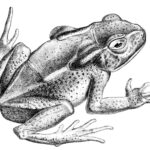
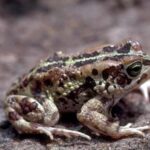
Capensibufo rosei rarely exceeds 3 centimeters in length, making it one of South Africa’s smallest toads. Its coloration—a mosaic featuring chocolate brown, gray, red, and olive patches—is supremely adapted to provide camouflage amongst damp leaves and rocks of mountain streams and fynbos undergrowth. Such coloration patterns aren’t merely aesthetic; they offer critical protection from predators such as birds, snakes, and small mammals.
Adaptations for Survival#
These small-bodied amphibians showcase a compact, streamlined appearance, paired with short limbs and an unassuming, flattened shape ideal for slipping between layers of vegetation, rocks, and roots. Their skin, unlike the warty textures stereotypically associated with other toads, is smoother, providing subtle camouflage within moist environments. An inconspicuous and secret life in the damp fynbos allows Rose’s Mountain Toad advantages both in predator avoidance and moisture retention, crucial adaptations in an environment that regularly experiences drought.
Perhaps the most remarkable characteristic is their eyes—large and expressive, equipped with adaptations for nocturnal navigation and efficient hunting after sunset. These precise evolutionary adjustments speak volumes about survival strategies nurtured over millions of years.
Behaviors, Life Cycle, and Natural History#
The cryptic habits of Rose’s Mountain Toad extend beyond simple physical camouflage. Most activities—hunting, mating, vocalizations—occur under cover of darkness, or during misty, rainy conditions. They survive predominantly on small invertebrates, such as beetles, ants, spiders, and other insects abundant in damp microhabitats.
Fascinating Reproductive Strategies#
The arrival of the rainy season cues an extraordinary annual event. Male toads gather at temporary pools and begin their quiet, bleating chorus—a symphony so subtle and discreet it blends perfectly with the ambient sounds of dripping rain and rustling leaves.
Following mating rituals involving understated but persistent calling, females lay clusters of gelatinous eggs in shallow, slow-moving waters. Amphibian eggs are remarkably sensitive, and the carefully chosen microhabitat ensures their protection against extremes of temperature, drying winds, and the watchful eyes of predators.
In a matter of days, these small pools burst into life as eggs hatch into delicate tadpoles. These tadpoles must race against time, undergoing rapid transformation—emerging fully formed juveniles—before the pools dry out again, revealing yet another remarkable evolutionary adaptation to the ecological constraints they face.
A Keystone: Ecological Role of Rose’s Mountain Toad#
Though small, this amphibian serves critical roles within its habitat. Consuming vast quantities of small invertebrates, it keeps arthropod populations balanced, indirectly supporting plant health and aiding overall ecosystem equilibrium. Furthermore, as prey items for birds, reptiles, mammals, and larger amphibians, they represent a vital nutritional resource, integral to the fynbos food web.
Amphibians like Capensibufo rosei also serve as crucial bio-indicators, sensitive to pollution, climate events, or changes in habitat, providing early alerts of ecosystem imbalance before it becomes irreversibly detrimental.
Threats and Conservation: A Species at the Crossroads#
Presently classified as “Vulnerable” by the IUCN, Rose’s Mountain Toad faces significant challenges due largely to habitat degradation, urban encroachment from nearby Cape Town, invasive plant species, and climate-change-induced shifts in rainfall patterns, threatening their precarious seasonal wetland habitats.
Conservation Action and Needs#
Urgent conservation initiatives have begun to highlight population monitoring and wetland restoration. Conservationists collaborate with local communities to restrict invasive vegetation and protect vital breeding grounds. By educating the public about this species’ plight, scientists, citizen conservationists, and local authorities all participate in crucial preservation campaigns.
Cultural and Scientific Significance#
Although little known culturally outside specialized circles, Capensibufo rosei symbolizes the fragile yet resilient biodiversity of South Africa’s fynbos biome. Scientifically, its sensitivity to changes in moisture and temperature makes it an essential species for studying climate change’s regional impact.
Researchers eagerly analyze the interconnections between amphibian populations and habitat health, noting that shifts in amphibian distribution, health, and breeding success offer keen insights into broader environmental patterns and threats.
A Call to Action: Protecting Rose’s Mountain Toad#
Few people encounter, or even appreciate, the existence of the diminutive Rose’s Mountain Toad, but its survival is emblematic of broader ecological health. Reflect on the extraordinary natural heritage encompassed within Cape Town’s mountainous fringes, and explore ways you can support conservation programs or participate in citizen science initiatives aimed at conserving endangered amphibians.
In protecting such small and sensitive species like Capensibufo rosei, we protect the intricate ecological relationships and processes that define and sustain life in our shared environment. Preserving hidden gems of biodiversity demands collective stewardship, species-focused attention, and gratitude toward the fragile natural world upon which we depend.