- Unveiling Capensibufo deceptus: Secrets of South Africa's Elusive Deceptive Mountain Toad
- Taxonomy and Classification: A Frog of Subtlety and Significance
- Natural Habitat: Life on the Mountain's Edge
- Physical Characteristics: Master of Camouflage and Adaptation
- Behavior and Life Cycle: A Life Timed by the Elements
- Ecological Role: Guardians of a Delicate Mountain Mosaic
- Threats and Conservation Status: Fighting for Survival
- Cultural and Scientific Significance: A Tiny Creature, an Outsized Influence
- Conclusion: An Invitation to Act
Unveiling Capensibufo deceptus: Secrets of South Africa’s Elusive Deceptive Mountain Toad#
Hidden within the rugged, wind-swept mountain ranges of South Africa lies a humble amphibian that continues eluding biologists and naturalists alike—the Capensibufo deceptus. Its understated appearance and reclusive lifestyle belie a fascinating biological story full of mystery, adaptability, and delicate ecological balance. Known commonly as the Deceptive Mountain Toad, this enigmatic creature captures the intrigue of wildlife enthusiasts not merely for its elusive habits but also for its contribution to biodiversity and environmental health. Join me on this captivating journey as we explore the world of Capensibufo deceptus, a frog so carefully adapted to its environment we might almost overlook it entirely.
Taxonomy and Classification: A Frog of Subtlety and Significance#
Capensibufo deceptus belongs to the family Bufonidae, commonly known as true toads. The genus name, Capensibufo, points directly to its regional affinity—derived from “Capensi,” reflecting its South African origin, and “bufo,” the Latin term for toad. The species epithet “deceptus,” meaning deceptive, was aptly chosen to describe its cryptically camouflaged nature, making it particularly challenging even for seasoned herpetologists.
This frog shares its genus with only a few closely related species, each confined to very specific mountainous areas. Its relatives, such as Capensibufo rosei and Capensibufo tradouwi, are similarly elusive amphibians restricted geographically, each evolved in isolation into remarkable ecological specialists.
Natural Habitat: Life on the Mountain’s Edge#
Inhabiting the montane fynbos ecosystems of the Western Cape Province of South Africa, Capensibufo deceptus is uniquely adapted to high-altitude habitats. The montane fynbos—with its low, dense evergreen shrubs, herbs, and grasses—is known for frequent mists, sudden climatic changes, and dramatic topography. None might seem hospitable for amphibians, yet the Deceptive Mountain Toad thrives precisely in this harsh cradle.
The Beauty and Brutality of Montane Fynbos#
Walk with me through a series of rocky slopes blanketed in delicate yet resilient fynbos vegetation—a scene painted in soft misty hues, shadowed by towering sandstone peaks. Streams trickle intermittently, forming seasonal pools after rainfall—a crucial haven for the tiny inhabitants like Capensibufo deceptus. These temporary waterbodies represent safe nurseries away from voracious fish predators, providing a haven for amphibian breeding.
The toad’s preference for ephemeral pools and damp, secluded environments showcases its specialized nature. Within these delicate aquatic realms, reproductive life unfolds with swift elegance, timed precisely to the brief periods of rainfall—the lifeblood of these mountainous habitats.
Physical Characteristics: Master of Camouflage and Adaptation#
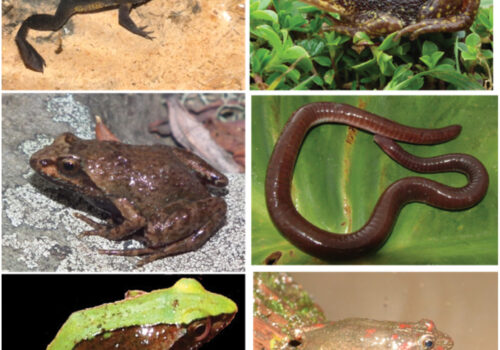
At first glance, the Deceptive Mountain Toad appears drab, even unremarkable. Adults rarely measure more than 30 millimeters in length, blending seamlessly into their rocky surroundings with mottled brown, grey, and earth-toned skin. Upon closer look, however, we begin to appreciate the intentionality behind this subtle appearance. Skin textures mirror lichen-covered stones and mossy clumps—perfect camouflage that belies an intricate evolutionary dance of survival.
Adaptive Anatomy: Why Smaller is Better#
Capensibufo deceptus sports sturdy limbs designed for navigating rocky crevices with impressive agility. Short yet powerful hind legs propel these amphibians in hopping motions that easily traverse uneven, rugged terrains. Their bodies, ranging in shades from subtle olive-grey to sandy-brown, are gently mottled—traits that conceal them among the leaf litter and gravely streamsides, making them nearly invisible to predators like birds and snakes.
Such diminutive physical size confers distinct advantages. Reduced stature conserves moisture—crucial given their ever-changing habitats. Moreover, smaller animals require fewer resources, an invaluable adaptation in resource-limited montane environments.
Behavior and Life Cycle: A Life Timed by the Elements#
The elusive nature of Capensibufo deceptus echoes throughout its entire life cycle. In synchrony with weather and seasons rather than a fixed calendar, these amphibians burst into activity only when climatic conditions permit.
Rainfall Dances: Breeding in Ephemeral Pools#
The arrival of rains transforms the quiet habitats of the Deceptive Mountain Toad into a flurry of amphibian activity. Males congregate at temporary pools formed in rocky depressions, issuing soft, rhythmic calls designed to attract females wandering nearby. The reproductive strategy is rapid, deliberate, and resourceful—eggs laid swiftly in gelatinous strings beneath water, maturing quickly to maximize survival rates.
Tadpoles are again models of adaptability. They develop rapidly, transitioning from swimming larvae to miniature land-dwelling adults efficiently before their ephemeral aquatic worlds vanish with receding water. This delicate synchronization underscores the incredible dependence of Capensibufo deceptus on seasonal rains, marking the amphibian’s masterstroke of timing and resourcefulness.
Ecological Role: Guardians of a Delicate Mountain Mosaic#
Despite its small size, Capensibufo deceptus delivers an oversized ecological impact. Amphibians like this play crucial roles in montane ecosystems, effectively transferring nutrients between aquatic and terrestrial environments.
Indicators of Ecosystem Health#
As insectivores, these frogs exert critical control over insect populations. Their diet primarily consists of small insects—including beetles, ants, and flies—helping to maintain balance and healthy vegetation growth. Beyond controlling insect populations, amphibians such as Capensibufo deceptus are invaluable indicators of environmental conditions. Their porous, permeable skin makes them particularly sensitive to shifts in ecosystem health, rendering their presence—or absence—a powerful ecological signal.
They also nourish other species—birds, snakes, and small mammals—creating connections within the food chain. Without these seemingly obscure amphibians, delicate ecological networks can quickly unravel, underscoring their quiet but essential role within mountain biodiversity.
Threats and Conservation Status: Fighting for Survival#
Though robustly adapted to harsh montane habitats, Capensibufo deceptus is not immune to changes occurring across its region. Increasingly marginalized habitat areas limit the species’ ability to endure.
A Species Under Pressure#
The International Union for Conservation of Nature (IUCN) has classified Capensibufo deceptus as Near Threatened, raising red flags over its conservation plight. Its restricted distribution and strong dependency on specific habitat conditions especially vulnerability to climate change-driven rainfall shifts, habitat disruption, and rising overall environmental variability.
Habitat disturbances caused by human encroachment, soil erosion from agriculture, invasive plant species, and potential pollution carry devastating impacts. Additionally, shifting rainfall patterns—a direct consequence of climate change—pose serious existential threats given their dependence on fleeting water resources.
Conservation Efforts and Future Prospects#
Fortunately, dedicated conservationists and organizations in South Africa have taken notice and begun taking measures to safeguard Capensibufo deceptus and its habitat. Restoration programmes, targeted habitat preservation, invasive species control, and local education are key initiatives currently underway to secure the future of this unique amphibian.
Yet, there remains much work to do. Conservation-related activities must continue growing and adapting, driven both by community participation and solid scientific research. Future success relies heavily on protecting habitats at a landscape scale and cultivating an understanding of ecological interdependencies among local human communities.
Cultural and Scientific Significance: A Tiny Creature, an Outsized Influence#
Though culturally quiet, Capensibufo deceptus holds critical importance within scientific circles. Amphibian research worldwide leans heavily on understanding specialist species inhabiting extremes, positioning frogs like this as valuable study subjects for evolutionary biology, ecological resilience studies, and climate impact research.
Across South Africa, indigenous cultures have long recognized the broader ecological role amphibians play, respecting their habitats through traditional ecological knowledge. Amidst growing global emphasis on biodiversity and ecological protection, re-acknowledging these cultural traditions becomes crucial, underpinning conservation with local heritage values tied deeply into the landscape itself.
Conclusion: An Invitation to Act#
Capensibufo deceptus, though small and often unseen, inhabits a vital ecological niche within South Africa’s majestic mountain landscapes. Understanding its remarkable adaptations, life story, and plight inspires a collective responsibility to ensure these delicate frogs persist for future generations.
Each of us can help—whether by supporting conservation initiatives, raising awareness, or respecting local habitats and biodiversity. Let the Deceptive Mountain Toad inspire your curiosity, ignite your passion for biodiversity preservation, and unite us in safeguarding nature’s quiet yet compelling stories for years to come.