Bufoides bhupathyi: Discovering India’s Enigmatic Amphibian Jewel#
In the lush mountains and verdant valleys of India’s Western Ghats, a diminutive yet compelling amphibian thrives quietly beneath the cover of damp leaf litter. Meet Bufoides bhupathyi, a frog so inconspicuous yet intriguing that scientists only recently uncovered its secrets. Bearing the common name “Bhupathy’s Toad,” honoring noted Indian herpetologist Dr. Subramaniam Bhupathy, this species embodies the profound biodiversity and mystery of its native land. Though small, measuring barely two inches, this amphibian carries enormous ecological significance, becoming a living emblem of the need to conserve India’s rich natural heritage.
A curious fact sets this humble species apart: they are among the rarest amphibians, known only from very limited areas in the mountainous terrain of the Western Ghats. This scarcity and specificity not only add to their mystery but lend urgency to conservation actions. While not as famous as the Bengal tiger or the Asian elephant, Bufoides bhupathyi quietly underscores the intricate and fragile web woven by nature, compelling us to look deeper, tread lighter and listen closer.
Taxonomy and Classification#
To truly appreciate Bufoides bhupathyi, it helps first to understand its place in nature’s intricately organized hierarchy. Belonging to the amphibian class Amphibia and the Anura order (frogs and toads), this species falls within the family Bufonidae, typically known as “true toads”. However, the genus Bufoides remains distinctive, currently monotypic—meaning Bhupathy’s Toad is the only species found within it, enhancing its uniqueness and emphasizing the conservation urgency surrounding it.
The species was scientifically described in 2016 by a dedicated team of Indian researchers. Named in tribute to the late Dr. Subramaniam Bhupathy, one of India’s prominent amphibian biologists, the naming serves as both homage and testament to the richness of India’s biodiversity that this celebrated scientist committed his life to studying and protecting.
Natural Habitat#
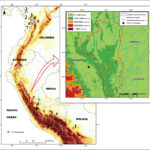
Bhupathy’s Toad occupies a very specific niche—a mosaic of tropical montane forests, damp understory regions covered with leafy debris, and moist, shaded rock crevices along forest streams. This habitat preference highlights its narrow environmental tolerances and the delicate balance required for its survival. Found exclusively in the southeastern region of the Western Ghats, particularly within Tamil Nadu and parts of Kerala, its distribution underscores the profound ecological significance of this region, recognized as one of the world’s biodiversity hotspots.
Here, mist-wrapped forests cloaked in vibrant greens and hum with life. Sunlight gently filters through thick layers of canopy, casting mottled shades upon a floor carpeted by fallen leaves. Hidden from view, Bufoides bhupathyi cherishes the moist cover, staying safely concealed from predators while accessing abundant small arthropods—its primary food source. Its habitat is a continuous interplay of moisture, leaf litter, small streams, and dense vegetation that supports this amphibian and countless other exquisite species. The frog relies on these critical conditions: slight ecological disturbances can significantly affect the tiny creature, thus highlighting a fragile coexistence.
Physical Characteristics#
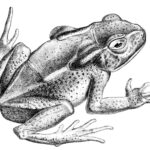
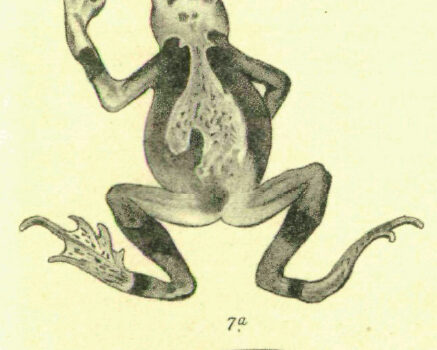
Characterized by its small stature, Bufoides bhupathyi typically measures around 20-25 mm in length, fitting comfortably atop a human thumbnail. Its minute size greatly aids its secretive existence, allowing it to slip unobtrusively through underbrush and blend effortlessly into leaf litter.
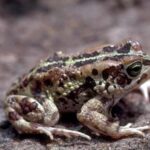
Upon close observation, the intricate beauty of this tiny amphibian becomes apparent. Their coloration expertly mirrors their environment—brownish to olive-green shades stippled with darker patches and faint yellowish or cream-colored markings, camouflaging them spectacularly against decaying foliage. Their skin, textured with small, granular bumps, not only enhances their concealment but aids in moisture retention critical to fragile amphibian skin.
Prominent eyes, relatively large for their diminutive size and exquisitely adapted for nocturnal activity, glisten like moist pearls; they appear luminous at dusk when frogs stir, actively seeking food. Powerful hind legs suited for hopping allow swift evasion from potential predators or quick navigation across uneven terrain. Every trait on this tiny creature is exquisitely honed through millions of years of evolution to suit the exact conditions of its sheltered microhabitat in the Western Ghats.
Behavior and Life Cycle#
The ways in which Bufoides bhupathyi behaves offer significant insights into its adaptations toward a subtle existence. Active primarily during the wet monsoon season when streams swell and arthropod prey flourishes, these frogs emerge under cover of darkness from their daytime hideaways beneath logs, leaf litter, and rock crevices near streams. They forage by sitting quietly or slowly ambushing small invertebrates such as ants, beetles, flies, and spiders with quick flicks of a sticky tongue, a behavior reminding observers of the precision inherent in nature’s delicate predatory balance.
Bufoides bhupathyi breeds exclusively during monsoons, utilizing small temporary forest streams for laying delicate clusters of transparent eggs. Males announce reproductive availability through a distinctive yet subtly low-pitched trill—a sound easily lost amidst the rain-swayed foliage and rhythmic heartbeat of the surrounding forest. Once fertilized, the eggs swiftly develop, with tadpoles adapted to fast-changing environmental conditions typical within ephemeral streams that often dry soon after the rains cease. Such resilience and adaptability showcase nature’s capacity for innovation and specialization in even the tiniest of creatures.
Ecological Role#
Even modest creatures like Bhupathy’s Toad hold remarkable ecological roles within their habitats. As both predator and prey, Bufoides bhupathyi is integral to the complex food web thriving beneath the dense tree canopies of the Western Ghats. Feeding primarily on arthropods, it participates vitally in controlling insect populations, thus preventing any unchecked proliferation that could imbalance local ecosystems.
In turn, this amphibian serves as prey for various birds, reptiles, small mammals, and larger amphibians that venture through leaf litter in pursuit of nourishment. Moreover, amphibians such as Bufoides bhupathyi serve as vital ecological indicators—they reflect the health of the environment due to their permeable skin and sensitivity to pollutants and other disturbances. Hence, declining Bufoides populations may prompt early warnings of imbalance or deterioration in ecosystem health.
Threats and Conservation Status#
Conservationists view Bhupathy’s Toad with increasing concern. While the official International Union for Conservation of Nature (IUCN) assessment remains pending due to limited published population data, preliminary evaluations by local researchers suggest this species faces substantial threats—primarily habitat loss due to encroachment by agriculture, logging, infrastructure development, and urbanization.
Additionally, climate change impacts rainfall patterns, affecting breeding timing and reducing available breeding habitats. Pollution runoff into ephemeral streams could prove hazardous for delicate frog eggs and highly sensitive tadpoles. Diseases, particularly Chytrid fungus—an affliction devastating amphibian populations globally—also poses imminent risks.
Current conservation efforts emphasize preserving intact habitats in critical biodiversity hotspots like the Western Ghats. Local researchers and NGOs invest substantial effort in awareness programs, educating communities living alongside Bufoides bhupathyi habitats. Eco-tourism incentivizes sustainable practices, promoting coexistence, and biodiversity protection. Long-term success will depend on collaborative involvement across community, scientific, and governmental levels.
Cultural and Scientific Significance#
In naming the species after Dr. Subramaniam Bhupathy, a respected scientist who dedicated his life to biodiversity conservation and amphibian research, Bufoides bhupathyi becomes emblematic, linking biodiversity science with cultural appreciation. It symbolizes India’s ongoing efforts to honor individuals contributing significantly to wildlife conservation while shining a spotlight on lesser-known, albeit critically valuable, biodiverse species.
Scientifically, discovering Bufoides bhupathyi enriches our understanding of vertebrate evolution and geographic biodistribution in a globally important conservation area. Researchers continue studying its biology, physiology, and ecology, revealing in-depth insights into adaptive strategies amphibians employed in unique geographic and climatic niches. Each observation and documentation of this species contribute to expansive knowledge about life on our planet, underscoring the importance of protecting the habitats still concealing abundant mysteries.
Conclusion#
Bufoides bhupathyi represents more than a small Indian amphibian hidden among leaf litter in mist-clad woodlands—it’s a symbol of biodiversity, resilience, and nature’s intricate interconnections. It implores us to recognize, respect, and protect the delicate tapestry of living entities coexisting alongside humanity. As nature’s stewards, it’s fundamentally our responsibility to ensure that creatures such as Bhupathy’s Toad survive and thrive, essential not merely for their ecological functions, but for their irreplaceable intrinsic value. Let’s preserve the world where fascinating creatures await discovery just beneath our feet—such stories deserve forever to be told.