- The Jewel of the Understory: Exploring the Fascinating World of Bufo tuberospinius
- Taxonomy and Classification: Unveiling the Frog’s Family Tree
- Natural Habitat: A Wanderer of the Leafy Shadows
- Physical Characteristics: A Masterwork of Camouflage and Survival
- Behavior and Life Cycle: Elegance Amidst Routine Survival
- Ecological Role: Guardians of the Forest Balance
- Threats and Conservation Status: Navigating an Uncertain Future
- Cultural and Scientific Significance: Frogs as Living Symbols
- Conclusion: Embracing Responsibility for a Hidden Treasure
The Jewel of the Understory: Exploring the Fascinating World of Bufo tuberospinius#
Hidden among the dense foliage, beneath the dappled moonlight of tropical forests, a mysterious amphibian thrives silently—Bufo tuberospinius, commonly called the knobby-spined toad. With understated charm and cryptic lifestyles, this remarkable frog species enchants biologists and wildlife enthusiasts alike. Little-known beyond scientific circles, this unique member of the Bufonidae family possesses traits that are both intriguing and ecologically significant, mirroring the richly textured habitats it calls home.
From its textured skin lined with peculiar spines to its nocturnal behaviors whispering through thick forest stands, Bufo tuberospinius offers fascinating insights into the complexity and beauty of amphibian biodiversity. Let’s venture into the mysterious understory world where this amphibian thrives, discovering its life, habitat, and why it remains an important conservation cause.
Taxonomy and Classification: Unveiling the Frog’s Family Tree#
The scientific exploration and taxonomic naming of Bufo tuberospinius date back to authoritative taxonomic work that classified it within the extensive toad family, Bufonidae. This group comprises highly adaptable amphibians scattered widely across regions spanning all continents except Antarctica.
The genus Bufo, to which our featured toad belongs, is richly diverse, encompassing species adapted remarkably to vastly different habitats—from arid deserts to lush rainforest habitats. Its Latin-denominated species epithet, tuberospinius, alludes to a defining morphological trait—the presence of pronounced, wart-like tubercles adorned with characteristic spines along its skin. Bufo tuberospinius stands out among its peers with this striking physical uniqueness, bringing palpable intrigue to those encountering it for the first time.
Natural Habitat: A Wanderer of the Leafy Shadows#
Found predominantly within the humid lowland forests of South America, Bufo tuberospinius has adapted immaculately to thrive amidst dense, moss-covered understories, leaf-littered terrain, and small freshwater streams. Its distribution includes parts of Brazil, Ecuador, Peru, and Colombia, preferring pristine habitats often far removed from human encroachment.
Adaptation to a Hidden World#
The rainforest floor provides a remarkably diverse microhabitat teeming with an abundance of insects, a vital food supply sustaining the frog’s diet. High humidity and steady temperatures within this habitat create ideal living conditions for sensitive amphibian skins, while the thick foliage grants essential hiding spots from predators and harsh sunlight.
Bufo tuberospinius demonstrates remarkable adaptation in balancing moisture levels required for survival. Spending daylight hours quietly nestled beneath leaf litter or fallen logs, this amphibian comes alive at dusk. Nightfall becomes a spectacular performance, as the frogs energetically forage amidst moist foliage, their presence highlighted merely by whispered rustles through darkened greenery.
Physical Characteristics: A Masterwork of Camouflage and Survival#
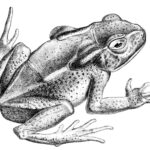
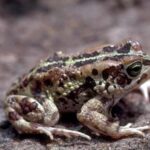
With a modest size averaging between 5 to 7 centimeters, Bufo tuberospinius does not initially command attention through sheer stature. Yet closer inspection reveals impressive biological details that prove invaluable for its survival. Its rough, wart-covered skin studded with short, sharp spiny projections lends the frog its common, evocative name—the knobby-spined toad. These skin textures neutralize visibility by mimicking forest floor detritus perfectly, crafting an evolutionary masterpiece of cryptic coloration and texture.
The coloration patches range from earthen browns, deep greens, to subtle shades of mottled gray, blending seamlessly into the backdrop of decomposing leaves, mosses, and lichens lining its jungle home. Distinctive horizontal golden or bronze irises further enhance its charming mystique, twinkling gently under moonlit shadows while watching cautiously for unsuspecting insect prey.
Physical adaptations like the wart-like glands located behind each eye, known as parotoid glands, produce toxins that deter potential predators. These defensive secretions ensure the Bufo tuberospinius survival strategy extends far beyond simply remaining still and unseen under nature’s protective cloak.
Behavior and Life Cycle: Elegance Amidst Routine Survival#
The behaviors of Bufo tuberospinius are driven primarily by survival, shaped through evolution to harmonize closely with the intricate rhythms of its forest habitat. As predominantly nocturnal creatures, these toads remain hidden during bright daylight, emerging after dark to hunt.
Nocturnal Foragers of the Forest Floor#
Bufo tuberospinius consumes an abundant diet primarily composed of ants, beetles, termites, spiders, and other terrestrial arthropods. Their subtle approach to hunting involves patiently waiting motionless, ready to dart their sticky, deft tongues to capture unsuspecting prey with astounding accuracy and speed. This efficient, energy-conserving style contrasts impressively with their rapid transformations during breeding seasons.
A Chorus Under the Stars: Breeding Habits#
Like many amphibians, rainfall triggers their reproductive behavior, inspiring males to gather in shallow pools, ponds, or slow-moving streams. Bufo tuberospinius males vocalize their low, rhythmic mating calls under the evening stars, their croaking chorus creating a soothing symphony resonating throughout humid forest clearings. Females attracted by these rhythmic serenades approach mating sites, selecting partners based on call quality and vigor.
After mating, the female deposits gelatinous strings of fertilized eggs within shallow aquatic environments, placing them strategically in locations less prone to predation. Within days, tiny tadpoles emerge, embark on their developmental journey, and transform dramatically over several weeks into small froglets capable of terrestrial exploration. Such astonishing metamorphosis highlights nature’s mesmerizing capacity for life, adaptation, and evolution.
Ecological Role: Guardians of the Forest Balance#
In ecosystems dense with biodiversity, amphibians like Bufo tuberospinius play critical ecological functions, often serving as integral indicators of environmental health. Occupying essential roles within food webs, this species maintains arthropod populations in check while acting simultaneously as prey for diverse predators—including birds, snakes, and mammals.
Moreover, amphibians possess highly absorbent skins making them sensitive barometers revealing habitat contamination levels or environmental disturbances long before other signs become evident. Thus, tracking Bufo tuberospinius populations and health contributes significantly to broader efforts gauging atmospheric pollutants, habitat degradation, and climate change effects.
Threats and Conservation Status: Navigating an Uncertain Future#
Despite adapting remarkably to niche environments, the knobby-spined toad faces daunting threats arising primarily from habitat fragmentation, deforestation, and expanding agricultural activities. Loss of pristine forest habitat proves especially devastating; habitat corridors become rarer, isolating population groups and diminishing genetic diversity. Moreover, climate-change-driven shifts in rainfall patterns disrupt crucial breeding cycles and water-body availability for larvae development.
Protection Efforts and Conservation Strategies#
Currently, Bufo tuberospinius faces the concerning designation of “Data Deficient” by the International Union for Conservation of Nature (IUCN), emphasizing urgent needs for increased research into this species. Regional conservation initiatives advocate strongly for habitat preservation, recognizing primary forest protection vital in safeguarding amphibian biodiversity.
Educational programs also improve local community awareness regarding these delicate species and environmental resilience, informing populations about sustainable land management practices and habitat restoration potential, ultimately ensuring Bufo tuberospinius continues to charm generations for years to come.
Cultural and Scientific Significance: Frogs as Living Symbols#
Amphibians prominently influence cultural symbolism throughout history, often depicted as ecological guardians or mythical conduits bridging terrestrial and aquatic realms authentically. In several local folklore stories across South America, amphibians symbolize prosperity, renewal, and even natural weather forecasters due to their rain-triggered breeding behavior.
Scientifically, Bufo tuberospinius and its relatives aid crucial research, uncovering unique defensive toxins and bioactive compounds that offer potential breakthroughs in pharmacological discoveries. Scientists increasingly value these amphibians for their broad biochemical reservoir capable of unlocking advancements in medicines, including antibiotics, pain treatments, and antivirals.
Conclusion: Embracing Responsibility for a Hidden Treasure#
Bufo tuberospinius exemplifies the astonishing intricacy and wonder within Earth’s hidden corners. As we explore its world—the silent rustle of mossy leaves, the steady hum of insect prey, and whispered nighttime croaks—we grasp fully why safeguarding this amphibian species goes beyond simple amazement. It reaches into core responsibilities experienced by humanity as stewards of ecological riches and biodiversity.
In our understanding and appreciation of amphibians like the knobby-spined toad lies an essential truth: protecting such delicate species ensures we safeguard entire ecosystems, upon which all life depends. Let us remain eager to explore, learn, and protect the enigmatic jewel hidden among South America’s leafy shadows—Bufo tuberospinius.