Exploring Bufo pageoti: Secrets of the Paget’s Toad#
Hidden among lush vegetation, beneath damp leaf litter, and within the thick mists of the subtropical forests of Asia, lives an amphibian both captivating and enigmatic. Known scientifically as Bufo pageoti, or more commonly as Paget’s Toad, this often-overlooked species serves as an intriguing window into the delicate balance of ecosystems, amphibian biology, and conservation struggles. Though modest in appearance, Paget’s Toad holds scientific secrets essential to understanding the health of its environment. Let’s explore the fascinating story and biology of this remarkable toad.
Taxonomy and Classification#
Scientifically classified as Bufo pageoti, Paget’s Toad belongs to the family Bufonidae—commonly referred to as “true toads.” Within this expansive family are over 500 species spread across the globe, many sharing similar physical characteristics, from warty skin textures to prominent parotoid glands.
First described scientifically in 1937 by French herpetologist René Léon Bourret, Bufo pageoti occupies a unique niche within its genus. Though sharing close phylogenetic relationships with species such as Bufo melanostictus (the Asian Common Toad), Bufo pageoti exhibits distinct adaptations that set it apart in behavior and habitat preferences.
Natural Habitat and Distribution#
The journey to discover Bufo pageoti takes us primarily into the subtropical forests and montane regions of Southern China, particularly provinces like Yunnan and Guangxi, and extending into parts of Northern Vietnam. In these environments, a delicate interplay between moisture, temperature, and vegetation offers the ideal conditions for Paget’s Toad’s survival.
A Life in Subtropical Solitude#
For Paget’s Toad, the habitat is more than merely a backdrop; it’s integral to daily survival. Favoring humid, shaded forest habitats over dry and exposed terrain, Bufo pageoti elegantly navigates through the dense foliage and thrives near slow-moving streams, rocky outcroppings, and areas graced by constant moisture—a habitat rich with both abundant prey and hiding opportunities from predators.
The species demonstrates an impressive habit of burrowing underground or sheltering beneath fallen leaves and twigs during drier periods, preserving moisture with admirable efficiency. The moist microclimate not only facilitates skin health essential for respiration and moisture regulation but also offers an abundance of insects and other invertebrates—the cornerstone of the toad’s diet.
Physical Characteristics#
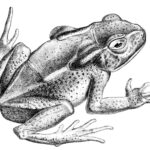
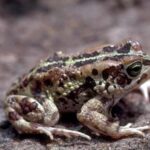
Bufo pageoti, like many within the Bufonidae family, possesses a compact body, broad head, and rough, warty skin. Adult individuals typically measure between 6 to 10 centimeters in length, their size comfortably nestled between the extremes of the Bufonidae family. Their coloration ranges remarkably across shades of earthy brown, olive-green, and grayish hues—a crucial adaptation enhancing their cryptic camouflage amongst leaf litter and bark.
Adaptations for Survival#
Paget’s Toad has prominent parotoid glands located directly behind the eyes. These sizable glands prove critical in the toad’s defense, secreting toxins that deter potential predators. Predators who misjudge their meal quickly learn from their mistake, as the toad’s secretions produce a bitter irritation and potential toxicity when ingested. Simultaneously, the granular surface of their skin conceals tiny glands vital in maintaining hydration while shielding them from environmental contaminants.
Their eyes, striking and expressive, are disproportionately large relative to body size, offering exceptional night vision capabilities crucial in their nocturnal foraging habits. Each of these remarkable physical traits showcases Paget’s Toad’s intimate evolutionary dance with its environment, perfectly adapted and attuned to the subtropical forest’s challenging demands.
Behavior and Life Cycle#
As twilight blankets the forest undergrowth in dimming light, Bufo pageoti awakens from its daytime shelter beneath damp logs or layers of leaf litter, ready to begin its nocturnal hunt. Bearing the night as its cautious companion, the Paget’s Toad emerges to feed primarily on insects, spiders, and other small arthropods meandering across the forest floor.
Mating and Reproduction#
The arrival of monsoon season brings remarkable transformation to the forests of Southern China and Northern Vietnam—and with it, the call of romance for Paget’s Toad. Male Bufo pageoti venture toward quiet streams, emitting soft yet persistent croaks to attract females. Females, significantly larger and more robust, respond to these calls by selecting potential mates based on a chorus of competing serenades—a spectacular nocturnal symphony echoing softly through the dark canopy.
After pairing, the female swiftly lays hundreds to thousands of tiny gelatinous eggs in transparent clusters adhered delicately onto underwater vegetation or gracefully draped on submerged rocks. Here begins the critical, delicate stage of amphibian life, where eggs develop rapidly, hatching within days under optimal conditions into energetic tadpoles.
These tadpoles engage actively in aquatic foraging, carefully scraping algae and detritus from submerged surfaces. Within several weeks, remarkable metamorphosis occurs. Gills recede, limbs develop, and lungs adapt for terrestrial life, allowing fully formed miniature toads to emerge from the water to begin their lives ashore, navigating the challenges and mysteries the land presents.
Ecological Role and Significance#
Beyond their captivating features and fascinating behaviors, Bufo pageoti fulfills crucial ecological roles, acting both as predator and prey. As diligent insectivores, these amphibians significantly suppress local insect populations, contributing notably to controlling pests capable of harming forestry and agriculture.
Simultaneously, Paget’s Toad serves as a valuable prey item within its native ecosystem. Snakes, larger amphibians, mammals, and avian predators find sustenance through these stout-bodied amphibians, maintaining the delicate web of ecological balance within subtropical ecosystems.
Moreover, amphibians such as Bufo pageoti serve vitally as sensitive bioindicators due to their permeable skin and biphasic (aquatic-terrestrial) life cycle, alerting researchers to subtle ecological imbalances such as habitat degradation, pollution, or climate change impacts. Their health frequently mirrors ecosystem integrity, thus highlighting the importance of scientific attention and conservation strategies toward species like Paget’s Toad.
Threats, Conservation, and Protection#
Though subtle and sometimes elusive within the dense undergrowth, Bufo pageoti faces substantial existential threats directly woven into humanity’s broader environmental challenges. Significant habitat loss, resulting from rapid agricultural expansion, logging, infrastructure development, and human encroachment, undermines essential ecosystems sustaining these amphibians.
Another emerging threat is climate change, destabilizing the subtropical moisture cycles, affecting rainfall patterns, and altering forest humidity regimes and habitats—directly threatening reproductive success and survival. Disease, particularly the fungal infection chytridiomycosis, remains an overarching menace known to severely impact amphibian populations worldwide.
Current Conservation Efforts#
At present, conservation organizations and local authorities primarily focus efforts toward habitat conservation. Initiatives include protecting prime habitats, forest reserves establishment, sustainable farming practices, and significant education programs tailored toward communities living in proximity to these sensitive habitats. While Bufo pageoti currently appears on regional biodiversity protection lists, comprehensive assessment by the IUCN is pending, underscoring an urgent necessity for further scientific observation and monitoring.
Cultural and Scientific Importance of Paget’s Toad#
Within the cultures across Southern China and Northern Vietnam, amphibians often symbolize regeneration, presage seasonal transitions, or harbor medicinal associations. Although no explicit cultural symbolism is exclusive to Bufo pageoti, regional folklore frequently recognizes frogs and toads as harbingers of prosperity, rain, or agricultural fortune.
In scientific circles, Paget’s Toad represents an invaluable subject for research. Insights gleaned from its biology, ecology, defensive chemistry, and adaptive behaviors enhance our understanding of amphibian evolution, ecosystem indicators, and global biodiversity patterns. Such research, underscored by conservation imperatives, contributes directly toward effective global biodiversity conservation strategies.
Conclusion#
Bufo pageoti—the Paget’s Toad—is more than just a small amphibian hidden beneath leaf-strewn forests. It symbolizes the interconnectedness and delicate harmony of ecosystems worldwide, embodying both resilience and vulnerability within our rapidly changing world. By understanding, appreciating, and protecting this little-known yet remarkable amphibian, we affirm our commitment toward conserving Earth’s vibrant tapestry of biodiversity.
We can and must forge a protective legacy for creatures like Paget’s Toad—by fostering curiosity, spreading knowledge, engaging our communities in conservation dialogue, and cultivating responsible stewardship for future generations.