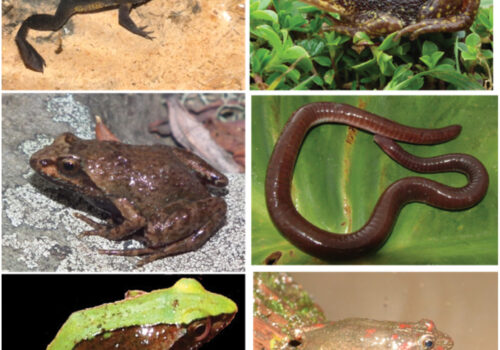
Into the Misty Mountains: The Enigmatic World of Bufo menglianus#
Hidden among the thick foliage and mist-shrouded mountains of Southeast Asia dwells an unassuming, yet captivating amphibian—the Menglian Toad, scientifically named Bufo menglianus. A creature easily overlooked by the casual observer, this toad’s significance reaches far beyond its humble appearance, offering us profound insights into habitat health, ecosystem dynamics, and environmental conservation.
In the age of rapidly dwindling wild habitats, frogs and toads such as Bufo menglianus are canaries in our ecological coal mine—sensitive indicators whose stories, when told, can reveal profound truths about our planet’s future. Join us as we take an in-depth journey into the life, behavior, and significance of this remarkable amphibian.
Taxonomy and Classification#
The Menglian Toad, known formally as Bufo menglianus, belongs to the family Bufonidae, one of the most widespread families of frogs and toads globally, encompassing hundreds of species in various habitats worldwide. Its genus, Bufo, is well-known among herpetologists and naturalists alike for its rich diversity and adaptability.
First described scientifically in meticulous studies published in the late 20th century, Bufo menglianus quickly distinguished itself due to its geographically restricted occurrence and unique morphological features. Closely related to other Asian Bufo species, this species’ evolution has been shaped by the unique ecological pressures and geological history of its native region, giving it distinct adaptations that deserve careful exploration.
Natural Habitat#
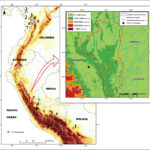
Journeying deep into the lush and misty mountain forests of southwest China, particularly the Menglian region of Yunnan Province, one encounters the true home of Bufo menglianus. These forests, cloaked in perpetual mist during the early morning hours and rainy season, are biodiversity hotspots, housing spectacular arrays of fauna and flora found nowhere else on earth.
A Mosaic of Microhabitats#
The preferred habitat of Bufo menglianus is typically mountainous subtropical forests, where elevation ranges from approximately 1,100 to 1,800 meters above sea level. Within these shaded, moisture-laden environments, the Menglian Toad thrives amidst leaf litter, rocky streamsides, moss-carpeted boulders, and narrow forest trails. Its home is one of shadowy nooks, secluded moss-flecked stones, and trickling freshwater streams that wind gently across the sloping terrain.
The toad’s habitat choice is no mere coincidence—it indicates evolutionary adaptations fine-tuned toward moisture-retention, camouflage from predators, and effortless access to nutritious invertebrates. Here, beneath the dense tree canopy, moisture availability and stable temperature conditions help to sustain amphibian life throughout the year.
Physical Characteristics#
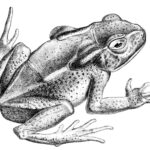
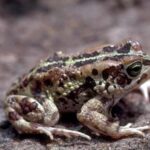
Bufo menglianus might not grab immediate attention with flamboyant hues and extravagant display; nevertheless, closer inspection reveals an elegantly adapted creature, shaped precisely by its habitat. Adult Menglian Toads typically range from 55 to 75 millimeters long, with females slightly larger than males—typical for many anuran species.
Its earthy, grayish-brown to olive-brown skin is speckled irregularly with darker spots and subtle blotches, perfectly mirroring the leaf-littered forest floors. Minute wart-like glands, distributed across its dorsal regions, secrete mild toxins that deter potential predators, while complex patterns break the animal’s outline, rendering it nearly invisible to passing threats like snakes or predatory birds.
Notably, the Menglian Toad bears distinct parotoid glands behind each eye—prominent features emblematic of the Bufonidae family. These glands secrete defensive toxins—a crucial anatomical adaptation honed over millennia, helping keep predators at a cautious distance.
Behavior and Life Cycle#
Masters of the Twilight Hunt#
When dusk covers the terrestrial realm in softness, the Menglian Toad begins its nightly routines. Operating largely under cover of darkness, Bufo menglianus ventures briskly and methodically across forest floors, its acute eyesight and keen senses guiding it toward unsuspecting insects—its preferred prey. Agile leaps facilitate sudden pounces on ants, beetles, spiders, and other tiny arthropods unlucky enough to cross its path.
Rainy Serenades and Mating Rituals#
The rainy season marks a period of great celebration within the forests inhabited by the toad. Fueled by heavy monsoon showers, male Menglian Toads gather near gentle forest streams and pools, their vocal sacs expanding into rhythmic, resonant choruses—a symphony signaling fertility, territorial claims, and courtship. Females, drawn by these deep crooning calls and instinctive reproductive urgency, seek out suitable males, their size and vocal prowess serving as indicators of genetic fitness and reproductive potential.
Following amplexus—the typical amphibian embrace to release its eggs—female Menglian Toads deposit lengthy strings of gel-like eggs in shallow water bodies. These transparent threads filled with developing embryos cling gently to submerged twigs or water vegetation—a haven for embryo development.
Within two to three weeks, tadpoles of Bufo menglianus emerge, dark-bodied and agile swimmers feeding voraciously on algae, detritus, and microscopic organisms. In the coming months, they gradually transform—developing legs, resorbing tails, and eventually climbing onto land to begin their terrestrial adventures as adult toads.
Ecological Role#
Though small and easily overlooked, Bufo menglianus occupies a fundamental niche within its mountainous subtropical ecosystems. As both consumer and prey, its existence weaves tightly into the local food web. By keeping populations of ground-dwelling insects under control, the Menglian Toad maintains balance within its habitat, ensuring that no single species becomes overly abundant and disrupts resource stability.
Simultaneously, this species itself offers essential nutrition to a range of predators—birds, snakes, mustelid mammals, and even larger amphibians. Thus, a healthy population of Menglian Toads is proof of ecosystem stability, a subtle yet indispensable indicator of balance in these mountainous ecosystems.
Threats and Conservation Status#
Like so many amphibians worldwide, Bufo menglianus faces increasingly severe threats. Habitat destruction precipitated by agricultural expansion, logging, infrastructure projects, and human settlements has fragmented its already limited range. Climate change, with shifting rainfall patterns and temperature extremes, further magnifies threats, as amphibians are highly sensitive to even subtle environmental disturbances.
Currently classified as Data Deficient on the IUCN Red List due to insufficient population data, there is a need for increased field studies documenting its abundance, distribution, and trends. Without accurate baseline information, conservation efforts become challenging; thus, there remains a critical need for dedicated monitoring programs and environmental awareness initiatives within local communities.
Cultural and Scientific Significance#
Within indigenous cultures of Menglian County, local folklore occasionally makes gentle mention of these elusive toads, often invested with symbolism relating to rains, fertility, or forest spirits—mythology interwoven deeply with ecological awareness.
Scientifically, amphibians like Bufo menglianus promote understanding of toxin biochemistry, ecological indicators, and environmental stressors. Researchers increasingly recognize its potential value in indicating habitat disturbance levels and aiding ongoing ecosystem assessments across the region.
Conclusion#
Behind the humble limbs and watchful eyes of the Menglian Toad lies a window into global biodiversity health. Its hidden existence in the remote misty mountains of Yunnan Province, its symphonic choruses, and its subtle yet indispensable ecological contributions remind us vividly that conservation and awareness must extend beyond charismatic fauna.
We owe it not only to the Menglian Toad but also to numerous other overlooked species worldwide—to document, understand, and protect their habitats. Let the story of Bufo menglianus inspire deeper reflection, compassion, and ultimately, action within each of us. Whether through community education, environmental volunteer work, or supporting organizations dedicated to amphibian conservation, every effort counts. Together, we can foster a brighter future for this quietly astonishing little creature and the ecosystems it calls home.