- Meet Bufo cryptotympanicus: The Enigmatic Hidden-Eardrum Toad of Southeast Asia
- Taxonomy and Classification: Decoding the Hidden-Eardrum Toad's Place in Nature
- Natural Habitat: Where Silent Shadows Meet Verdant Forest Floor
- Physical Characteristics: Mastery of Concealment
- Behavior and Life Cycle: Unveiling Hidden Facets of Life in Shadows
- Ecological Role: Guardians of Forest Health
- Threats and Conservation Status: Struggling to Survive in Changing Landscapes
- Cultural and Scientific Significance: An Ambassador of Silent Forest Realms
- Conclusion: Cherishing and Protecting the Hidden Wonders of Our World
Meet Bufo cryptotympanicus: The Enigmatic Hidden-Eardrum Toad of Southeast Asia#
Within the lush, expansive forests sprawling across the landscape of Southeast Asia, a curious amphibian lives quietly beneath the verdant foliage, often hidden from sight—a creature whose muted colors and elusive habits cloak it in mystery. The Hidden-Eardrum Toad, scientifically named Bufo cryptotympanicus, is a charismatic yet lesser-known inhabitant of these ancient lands. Unlike its more familiar relatives, the common toads and colorful frogs that often populate our gardens or forests, this fascinating species carries an intriguing biological secret: it possesses an unusual, obscured tympanum—an eardrum so hidden that scientists encapsulated this distinctive trait within its very name.
Though compact and humble in appearance, Bufo cryptotympanicus plays a significant role within its ecological niche. To nature enthusiasts, students, and conservation advocates alike, understanding the hidden-eardrum toad provides a window into the broader health and biodiversity of Southeast Asian forests. Come accompany me now as we journey into the mist-shrouded habitats of this elusive amphibian, exploring its biology, behaviors, ecological relationships, threats it faces, and the urgent need to safeguard its future.
Taxonomy and Classification: Decoding the Hidden-Eardrum Toad’s Place in Nature#
The Hidden-Eardrum Toad, Bufo cryptotympanicus, belongs to the broadly familiar family Bufonidae, a vast collective of amphibians commonly known as true toads. Within this family of about 600 species scattered across nearly all continents, the genus Bufo, where we find our cryptic subject, stands as one of the oldest and most widely distributed. Scientists define species within the genus Bufo by their dry, warty skin, characteristic parotoid glands behind the eyes, and diverse yet unassuming coloration—features perfectly exemplified here.
The name itself, “cryptotympanicus,” eloquently refers to the concealed nature of the species’ tympanum—the external ear membrane in amphibians crucial for hearing. In stark contrast to the prominently visible eardrums in many frog and toad species, this unique niche adaptation gives B. cryptotympanicus its name, derived from “crypto,” meaning “hidden,” and “tympanicus,” relating to the tympanum.
Natural Habitat: Where Silent Shadows Meet Verdant Forest Floor#
The Hidden-Eardrum Toad discreetly inhabits a richly biodiverse area of Southeast Asia, with known occurrences primarily in Vietnam, Laos, Cambodia, southern China, and parts of Thailand. Adapted to humid subtropical and tropical forested regions, its ecological requirements place it among shaded leaf litter, damp forest floors, and habitats marked with slow-moving bodies of freshwater such as small forest streams, pools, and ponds.
Stepping beneath the leafy canopy of these ecosystems, one is immediately enveloped in a dim, humid world bustling with countless lifeforms. Moss-covered tree trunks, dense undergrowth, and velvety carpets of decomposing foliage form the ideal environment for a toad built for quiet concealment. The humidity here is enduringly high, and ambient temperatures fluctuate moderately, ideal conditions for amphibians requiring moist microhabitats to regulate their delicate skin respiration.
This species remains mostly terrestrial, avoiding direct sunlight and perhaps only venturing nervously to shallow pools during breeding periods. The forest’s dense understory provides essential cover from predators—birds, snakes, and larger mammals who would readily make a meal of a carelessly exposed amphibian.
Physical Characteristics: Mastery of Concealment#
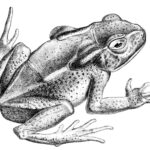
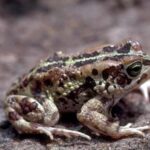
An encounter with Bufo cryptotympanicus is seldom a matter of chance rather than concerted exploration. It reaches a modest size, averaging about 5–7 centimeters in length. Its coloration—ranging from muted earth tones of brown, tan, gray, to mixtures flecked with subtle darker mottling—imparts near-perfect camouflage against forest leaf litter.
Closer examination reveals fascinating adaptations evolved for stealth and protection. Its drier skin texture, characteristic of the Bufo genus, is peppered with wart-like glands secreting mildly toxic substances—effectively deterring predators while keeping the skin moist for respiration. The cryptic tympanum—nearly completely covered by skin and situated behind its expressive eyes—grants resilience against parasites and potentially serves as defense against fungal or bacterial infections common in wet environments.
The toad’s physique suits its ecological niche perfectly, employing subtle, calculated movements, blending impeccably within root-strewn, leaf-covered habitats. At rest, it’s practically invisible to an untrained eye, embodying the art of secrecy and survival within a bustling, competitive forest realm.
Behavior and Life Cycle: Unveiling Hidden Facets of Life in Shadows#
Clever Foraging Habits#
As the cloak of twilight embraces forest habitats, Bufo cryptotympanicus stirs. Primarily nocturnal, this toad approaches the lush nocturnal shift expertly adapted for efficient feeding. Hidden-Eardrum Toads primarily consume small invertebrates, including ants, beetles, spiders, and other insects traversing the forest floor. Patiently concealed amid leaf litter, they ambush prey opportunistically; a swift flick of a sticky tongue spells doom for the unsuspecting insects, swallowed whole and unable to escape.
Reproduction: A Seasonal Symphony of Quiet Calls#
The breeding season brings about nuanced shifts in behavior. Often coinciding with monsoon seasons, rainfall signals male toads to congregate around suitable aquatic breeding sites, producing soft, rhythmic vocalizations—subtler than their louder congeners—to attract females. These quiet calls, likely a result of their concealed tympana and specialized auditory needs, underscore the hidden-eardrum toad’s discreet lifestyle.
Females who accept these soft serenades deposit small batches of gelatinous eggs into shallow pools or slow-moving stream sidewaters; here, amid calm waters safe from strong currents and significant aquatic predators, development proceeds rapidly. Eggs hatch swiftly into free-swimming tadpoles, meticulously adapted with dark pigmentation, inconspicuous among submerged vegetation. Within weeks, miraculous metamorphosis unfolds, transforming aquatic larvae into terrestrial juveniles, prepared to continue the discreet legacy of their species.
Ecological Role: Guardians of Forest Health#
Though inconspicuous, Bufo cryptotympanicus fulfills a vital ecological role. As insectivorous amphibians, they keep insect populations balanced, helping regulate potential pest species. In turn, they stand as crucial prey items for local predators—birds, snakes, small mammals—contributing to complex forest food webs.
Their sensitivity to habitat disruptions, disease, or toxins renders them crucial indicator species; subtle declines in their population can signal disruption to forest health before such consequences become otherwise observable.
Threats and Conservation Status: Struggling to Survive in Changing Landscapes#
Despite its ecological importance, Bufo cryptotympanicus faces mounting threats. Rapidly increasing deforestation for agriculture, illegal logging, and expanding human settlements have fragmented and destroyed significant forest corridors. Habitat loss and fragmentation have created isolated populations, placing pressure on genetic diversity and reproductive success.
The impact of climate change compounds these threats, altering rainfall patterns essential for breeding success and moisture-dependent lifestyles. Although currently listed as Least Concern by the International Union for Conservation of Nature (IUCN), ongoing environmental threats require monitoring and proactive conservation activities to prevent further decline.
Cultural and Scientific Significance: An Ambassador of Silent Forest Realms#
While not as culturally iconic as other frog species brightly celebrated in folklore or indigenous medicine, the Hidden-Eardrum Toad stands prominently within scientific research. Its adaptation involving a concealed tympanum could yield exciting discoveries regarding amphibian auditory evolution and disease resistance, potentially providing significant insights into vertebrate anatomy and pathology.
Conclusion: Cherishing and Protecting the Hidden Wonders of Our World#
Bufo cryptotympanicus, though humble and rarely seen, symbolizes the countless hidden species whose silent existence underscores the richness of our planet’s biodiversity. By learning, appreciating, and safeguarding such remarkable creatures, we invest in a thriving natural heritage for generations.
Through awareness, advocacy, and concerted conservation actions, we can ensure that the hidden-eardrum toad continues its inconspicuous yet invaluable life, weaving quietly through leaf litter, reminding us softly, eloquently, of nature’s boundless marvels.