Blythophryne beryet: Unveiling the Secret Lives of an Enigmatic Amphibian#
Hidden amongst the dense vegetation of forest undergrowth in the lush landscapes of Southeast Asia lives a creature as elusive as it is fascinating—the Blythophryne beryet, a remarkable amphibian whose discreet existence belies its ecological importance. Often overlooked in favor of louder, more flamboyant members of the rainforest, this petite, cryptic frog is a true gem of biodiversity. Scientifically categorized as Blythophryne beryet, its existence shines a spotlight onto the lesser-known parts of our planet’s incredible amphibian tapestry. One intriguing trait quickly captures attention—unlike many brighter, louder frogs, this species resides discreetly at the periphery of human awareness, fascinating those scientists and naturalists who venture deeply enough to discover its secrets.
What makes Blythophryne beryet more captivating is its subtle yet essential role within its ecosystem, serving as a crucial indicator of environmental health. Amid the complex web of life inhabiting the forests of Southeast Asia, the story of this understated amphibian becomes an illuminating chapter on ecological balance, adaptation, and survival.
Taxonomy and Classification#
Blythophryne beryet belongs to the Bufonidae family, commonly known as true toads. First scientifically described in recent decades, its genus—Blythophryne—is relatively novel, distinguishing the species taxonomically from the more familiar, common toads. The species epithet, beryet, itself hints at unique locality or characteristics intrinsic to its discovery.
This fascinating frog’s close genetic relatives share similar discreet behaviors and habitat preferences, further embedding the group’s reputation as “hidden jewels” within the forest ecosystem. Scientific classifications, evolutionary studies, and DNA analyses suggest recent divergences within the genus, indicative of highly specialized adaptations developed to survive in specific microhabitats.
Natural Habitat#
The geographic occurrence of Blythophryne beryet is clustered primarily in Southeast Asia’s humid tropical rainforests, particularly within regions of peninsular Malaysia and adjacent stretches of Thailand. Shelter beneath the dense canopies and amid leaf litter on the forest floor characterize the preferred habitats of this elusive species. Reliable observations remain scattered, limited largely to protected areas well-preserved from anthropogenic impact, highlighting its delicate dependence on pristine environmental conditions.
Imagine standing beneath towering dipterocarps, their massive trunks encircled by twisting vines, the air thick with humidity and infused with the aroma of damp earth. In such habitats, decomposing foliage becomes both shelter and hunting ground for the species. Moist, temperate microclimates deeply shaded from harsh sunlight offer refuge and prey in abundance, allowing the unassuming Blythophryne beryet to thrive invisibly within its world.
These forest floor dwellers play a subtle yet indispensable role, aiding in nutrient recycling and providing prey for various predators. They are particularly sensitive to changes such as deforestation, pollution, and climate shifts—indicators of broader habitat health. Thus, the continued existence of populations like Blythophryne beryet is a vital barometer for environmental conservation efforts.
Physical Characteristics and Adaptations#
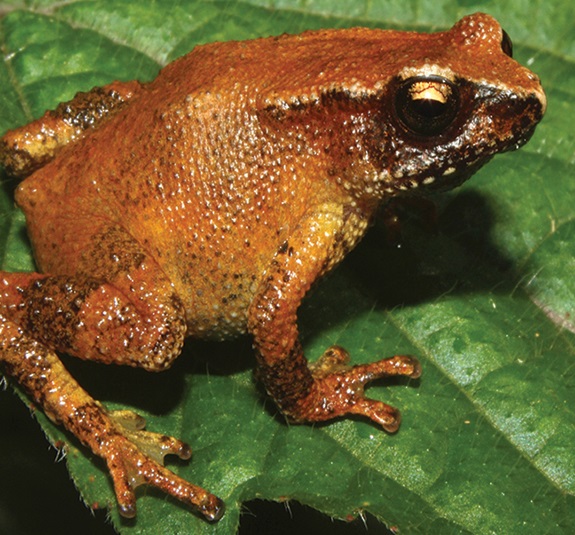
To observe an individual Blythophryne beryet is to appreciate the complexity of adaptations developed by living organisms in response to evolutionary pressures. Typically petite in size—just about 2 to 3 centimeters long—this frog is easily camouflaged amid leaf litter and soil. Its skin, an intriguing mosaic of browns, greys, and muted greens, perfectly merges with the visual textures of rotting leaves and mossy ground.
Viewed closely, fine granular patterns cover their skin, textures akin to rough aggregate surfaces. Such traits aren’t merely aesthetic—they facilitate a more seamless concealment from predators like birds and snakes. Reflective golden-brown eyes sit prominently atop their heads, instrumental in their nocturnal hunting strategies and reflective of their enhanced night vision.
Anatomically fascinating, Blythophryne beryet’s limbs are short yet muscular, perfect for quick, powerful jumps—critical for both predation and escape. Its agile form allows it to navigate deftly among obstacles of leaf litter and tangled roots, making it exceedingly difficult for predators—and even researchers—to pin down.
Behavior and Life Cycle#
Hunting and Diet#
As darkness conceals the dense forest canopy and nocturnal sounds orchestrate a symphony of mystery, Blythophryne beryet emerges from its daytime concealment. Strictly nocturnal, it relies upon the cover afforded by low visibility to safely hunt its prey. Its primary food source includes ants, termites, small beetles, and other insects plentiful within the leaf litter ecosystem.
The frog employs stealth-stalking techniques, remaining motionless, camouflaged amongst the detritus, patiently awaiting unsuspecting insects to approach within striking range. Utilizing its extendable, sticky tongue, it swiftly captures prey with surprising accuracy—a predator whose subtlety belies an extraordinary hunting skill.
Reproduction and Parental Strategies#
Like many rainforest amphibians, Blythophryne beryet’s annual lifecycle revolves heavily around the region’s rainy season. Monsoon rains trigger mass migrations toward small forest streams, ponds, or temporary pools where mating rituals commence. Male frogs emit gentle, trilled mating calls—soft, almost musical notes blending seamlessly into forest night sounds, serving both as communication to potential mates and cautious avoidance of predators’ ears.
Females deposit clusters of eggs attached to submerged foliage or leaf debris, carefully selecting sheltered locations away from swift-moving water or predators. Remarkably, recent studies suggest a unique, though subtle parental behavior: females periodically revisit egg clusters, possibly inspecting for fungal growth or predation. Tadpoles eventually develop amid still-water pools nourished by algae and detritus before metamorphosing into adult frogs prepared to join the forest realm.
Ecological Significance#
An often unseen yet indispensable player in the biological harmony, Blythophryne beryet acts as both predator and prey within its rainforest confines. Controlling insect populations, it regulates the structural integrity of the leaf-litter community, indirectly influencing the nutrient cycling and energy flow across multiple trophic levels.
Its presence significantly impacts predators: numerous species of snakes, lizards, and avian hunters rely upon this elusive amphibian as prey. Thus, the decline or collapse of Blythophryne beryet populations would signal disturbingly cascaded repercussions across the Asian rainforest food web—an ecological domino effect where even humble frogs wield surprising influence.
Threats and Conservation Status#
Despite its ecological importance, Blythophryne beryet faces serious threats. Rampant deforestation, primarily driven by logging, agricultural expansion, and palm oil cultivation, continues fragmenting habitats critical for survival. Reduced forest coverage impacts their delicate breeding grounds and food sources, and habitat fragmentation isolates populations, increasing vulnerability to extinction.
Furthermore, climate change-induced droughts, unpredictable weather patterns, and disease spread exacerbate species vulnerability. Amphibians globally suffer disproportionately from fungal infections like chytridiomycosis, a devastating disease proliferating globally, affecting populations such as Blythophryne beryet severely.
Currently, the International Union for Conservation of Nature (IUCN) underlines uncertainties concerning this species’ exact population status due to limited field studies. Classified insufficiently due to scarce data, it is strongly suggested researchers prioritize surveillance to establish appropriate conservation measures promptly.
Cultural and Scientific Significance#
Though modest and rarely spotlighted, frogs like Blythophryne beryet occupy fascinating niches, culturally as symbols of renewal, mystery, and transformation in Southeast Asian folklore. Local cultures have long viewed amphibians as connectors between different worlds—both terrestrial and aquatic; visible and invisible.
From a scientific perspective, the detailed study of these elusive frogs can unveil crucial climate and ecological insights unavailable through more conspicuous species. Patterns of their reproductive behaviors, health indicators (amphibians are sensitive bioindicators), and adaptation strategies provide essential data for biodiversity conservationists aiming to protect fragile rainforest ecosystems.
Conclusion#
Quietly inhabiting the shadowy world beneath Southeast Asian forest canopies, Blythophryne beryet exemplifies the immense ecological value hidden in even the smallest, most inconspicuous species. Its unique evolutionary adaptations, subtle behaviors, and pivotal ecological roles underscore the urgency of protecting delicate rainforest habitats.
Awareness, further research, habitat conservation initiatives, and public advocacy are necessary steps towards safeguarding this elusive treasure. As individuals committed to nature and wildlife conservation, we play crucial roles through education, sustainable lifestyle choices, and advocacy, ensuring creatures like the Blythophryne beryet quietly thrive, safeguarding ecological balance for generations to come.