- The Mysterious Beduka Tigerina: Secrets of the Forest's Hidden Jewel
- Introduction: Unveiling a Forest Gem
- Taxonomy and Classification
- The Natural Habitat of Beduka Tigerina
- Physical Characteristics: Stripes and Secrets
- Behavior and Life Cycle of the Tiger Frog
- Ecological Significance: A Vital Indicator of Ecosystem Health
- Threats and Conservation Status
- Cultural and Scientific Significance
- Conclusion: Protecting the Enigma of Beduka Tigerina
The Mysterious Beduka Tigerina: Secrets of the Forest’s Hidden Jewel#
Introduction: Unveiling a Forest Gem#
Deep within Southeast Asia’s lush rainforest, where sunlight penetrates dense canopies in mottled patches, a unique amphibian thrives quietly and camouflaged among leaf litter and moss-covered branches. This elusive creature is the Beduka tigerina, known commonly as the Tiger Frog, a species whose delicate presence symbolizes the fragile balance of one of the planet’s richest ecosystems.
Beduka tigerina—its very name conjuring imagery of stealthy beauty and mystery—inhabits environments vital to biodiversity, yet remains unknown to many nature enthusiasts. With distinct tiger-like stripe patterns and mesmerizing behaviors, this frog serves as both an ecological cornerstone and a living testament to evolutionary artistry. In this lengthy exploration, we embark on a narrative journey through its world, unraveling hidden behaviors, habitats, and the urgent conservation needs of Beduka tigerina.
Taxonomy and Classification#
First formally described by scientists exploring Southeast Asia’s forests in the early 20th century, Beduka tigerina belongs to the family Ranidae, a diverse group of frogs known commonly as “true frogs.” Within Ranidae, the genus Beduka is relatively small and largely specialized, containing only a few closely related species adapted to specific and limited habitats.
Beduka tigerina stands apart within its genus for distinctive striping patterns reminiscent of a tiger. These features not only underline its taxonomic distinguishability but also exemplify evolution’s artistry in shaping each organism for optimal survival within specific ecological niches. Comparative genetic studies place Beduka tigerina in close relation to some other Ranidae genera, illuminating evolutionary pathways that continue to fascinate biologists worldwide.
The Natural Habitat of Beduka Tigerina#
A Geographic Mosaic: Where the Tiger Frog Roams#
Native primarily to the humid tropical forests spanning regions of Malaysia, Indonesia, and parts of southern Thailand, Beduka tigerina thrives where dense vegetation and ample water converge. The species is seldom encountered in open landscapes or disturbed habitats, highlighting its sensitivity and preference for relatively untouched and shaded forest environments.
In Borneo’s dense lower montane rainforests, thick carpets of foliage form perfect hideaways, where the subtle movements of bedukas can remain invisible to all but the keenest observers. In these damp, shaded terrains, streams trickle quietly under lush canopies, creating an environment that provides essential moisture and food sources integral to the species’ survival.
Habitat Preferences: Life in the Shadows#
Beduka tigerina demonstrates specialized habitat preferences—often choosing humid conditions near slow-moving freshwater streams where prey abundance is reliably high. Within this preferred microclimate, the amphibian skillfully exploits particular features such as fallen leaves, submerged logs, and dense moss façades that adorn rocks and roots.
These frogs exhibit unique ecological behaviors, such as utilizing moist leaf litter or moss as daytime refuges, emerging at dusk to explore and forage within their territories. Beduka tigerina’s choice of habitat is not random—it is evidence of evolutionary optimization refined over millennia, exemplifying exquisite adaptation to their forest homes.
Physical Characteristics: Stripes and Secrets#
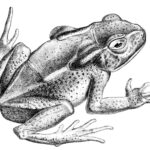
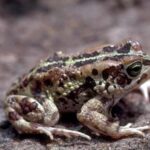
Beduka tigerina’s appearance successfully blends elegance with practicality. Adults measure approximately 6–8 centimeters in length, making them medium-sized within the diverse Ranidae family. Yet its physical beauty doesn’t rely on size; rather, it draws admiration through vibrant coloration and detailed patterning.
Its reciprocal dark and amber stripes serve dual purposes—camouflaging it seamlessly against leaf litter, and issuing stark warnings of its mildly toxic skin secretions to predators. Each stripe subtly twists and converges in a tapestry unique to individual frogs, serving almost as a fingerprint, assisting biologists in their research by offering identifiable markings without the necessity of disturbing the creature directly.
Their skin texture, moist yet roughened by microscopic granules, enhances the frog’s camouflage and hydration capabilities. Eyes, large and expressive, adopt golden hues flecked with darker flecks—adaptations offering excellent nocturnal vision, aiding them in navigation and capturing prey in limited luminescence.
Behavior and Life Cycle of the Tiger Frog#
Nocturnal Hunters of the Understory#
Behaviorally, Beduka tigerina is predominantly nocturnal. Days pass quietly hidden beneath layers of fallen leaves or mossy logs, but evenings transform their forest domains into spectacles of activity. Equipped with impeccable night vision, these frogs silently hop along moist underbrush, hunting for invertebrate prey such as insects, spiders, centipedes, and occasionally small crustaceans.
Their hunting technique is patient yet deliberate: they remain motionless, perfectly blended into their surroundings, waiting for unsuspecting prey to venture close enough for capture. A quick and accurate flick of that sticky tongue completes the hunt in seconds.
Mating Signals and Caring Parents#
Few moments in the forest are as enchanting as the mating displays of Beduka tigerina. Breeding typically coincides with heavy rains, encouraging substantial gatherings at forest pools and streams. From within shadowy nooks near water, male frogs emit rhythmic, melodious calls resembling soft woodwind notes—subtle serenades that guide responsive females toward potential mates.
Females deposit clusters of gelatinous eggs amidst submerged vegetation, favoring concealed sites where eggs are safe from predators. After hatching, tadpoles spend several weeks in aquatic nursery pools hidden within streams, feeding primarily on algae and organic debris. Remarkably, this amphibian exhibits moderate parental investment—in contrast to most frogs, Beduka tigerina occasionally demonstrates adult attendance near breeding sites, potentially deterring egg predation through their presence alone, an intriguing topic prompting further research.
Ecological Significance: A Vital Indicator of Ecosystem Health#
In ecological contexts, Beduka tigerina holds an influential status as an indicator species, having profound significance for biodiversity conservation and ecosystem integrity. Their populations and successful reproductive cycles often reflect the relative health and ecological stability of their tropical forest habitats.
As predators, they contribute significantly to insect population control, maintaining ecological balance by reducing pest proliferation. Conversely, their presence in the food chain also nourishes predators such as snakes, larger birds, and mammals—thus playing critical roles at both ends of the ecological spectrum.
Threats and Conservation Status#
Despite their ecological significance, Beduka tigerina populations face mounting pressures from habitat loss, deforestation, and climate change. Rapidly expanding agriculture, palm oil plantations, and infrastructure developments fragment their preferred habitats, causing marked declines in their distribution and weighted prospects for their long-term survival.
Although currently categorized by the International Union for Conservation of Nature (IUCN) as “Least Concern,” their habitat specificity and sensitivity to environmental changes necessitate vigilant monitoring and proactive conservation management plans. Broad-scale habitat restoration and the establishment of protected areas that buffer remaining populations should be considered conservation priorities.
Cultural and Scientific Significance#
While Beduka tigerina remains relatively obscure culturally, certain indigenous communities living within their habitats attribute symbolic importance to amphibians, associating their appearance with forthcoming rains and prosperous harvests—an insightful cultural acknowledgment of the frog’s ecological niche.
Scientifically, understanding Beduka tigerina continues to spark insights into amphibian adaptation, predator-prey interactions, and biodiversity conservation strategies. Researchers actively monitor these frogs, synthesizing their ecological roles into broader studies of rainforest health and climate resilience, illustrating the species’ significance to broader scientific inquiries.
Conclusion: Protecting the Enigma of Beduka Tigerina#
Beduka tigerina, one of nature’s quietly captivating species tucked amid vibrant rainforest life, embodies ecological interconnectedness and evolutionary wonder. Detailed knowledge of their unique biology, behavior, and vulnerabilities not only enriches human appreciation but also underscores the necessity of mindful conservation efforts to preserve delicate habitats from impending threats.
By continuing to explore, research, and protect such hidden gems of our planet’s biodiversity—like Beduka tigerina—we contribute essential steps toward safeguarding the immense richness and beauty of the natural world. Every reader, student, or nature enthusiast can take action, whether advocating sustainably sourced products, supporting conservation organizations, or spreading awareness about amphibians’ ecological importance.