- The Pebas Stubfoot Toad (Atelopus spumarius): Jewel of Amazonian Streams
- Taxonomy and Classification
- Natural Habitat: Amazonian Paradise
- Physical Characteristics: Beauty and Defense
- Behavior and Life Cycle: Harmony by Streambanks
- Ecological Role: Critical Cogs in Amazonia's Web of Life
- Threats and Conservation Status: Vulnerability Amid a Changing World
- Cultural and Scientific Significance: Amphibian Ambassadors of Knowledge
- Conclusion: Join the Chorus for Conservation
The Pebas Stubfoot Toad (Atelopus spumarius): Jewel of Amazonian Streams#
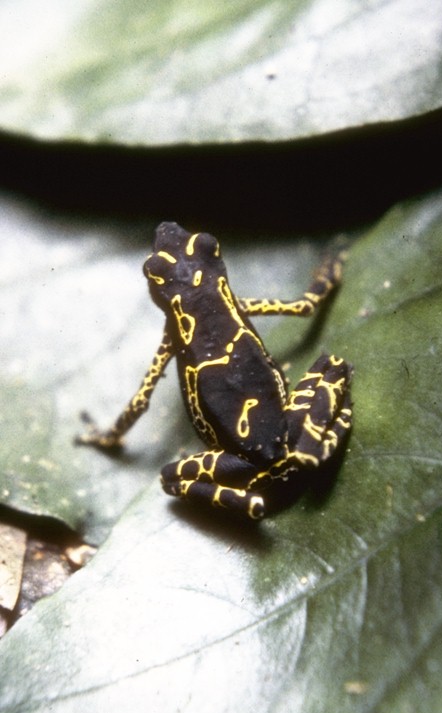
Hidden amid the lushest corridors of Amazonia, marked by softly murmuring brooks and shaded thickets, dwells a small yet striking amphibian: the Pebas Stubfoot Toad, scientifically known as Atelopus spumarius. Cloaked in vivid hues ranging from vibrant yellows and greens to intricate patterns of blacks and browns, this tiny amphibian might easily be mistaken for jungle jewelry, yet it serves a far loftier purpose.
More famously referred to as the Amazonian harlequin toad, Atelopus spumarius is admired not only for its flamboyant appearance but also because it carries considerable ecological significance. Its unique colors—a kaleidoscope that nature painted—signal potent toxin warnings to would-be predators. Beyond aesthetics, these small starkly patterned amphibians play an essential role in maintaining healthy rainforest ecosystems. Despite their beauty, they stand as vulnerable symbols of a fragile and quickly changing environment, each tiny creature holding stories with profound implications for conservationists and nature lovers alike.
Taxonomy and Classification#
The Pebas Stubfoot Toad (Atelopus spumarius) occupies a distinct spot within the fascinating taxonomic fabric of the animal kingdom. Belonging to the family Bufonidae—widely known as true toads—this species is a proud representative of the genus Atelopus, a group cherished among scientists due to their vivid coloration and critical conservation status.
Within taxonomy, members of the genus Atelopus are commonly known as harlequin or stubfoot toads, recognized for their comparatively short limbs, vibrant shades, and patterns. Atelopus spumarius shares its genus with species such as Atelopus zeteki (the celebrated Panamanian golden frog) and Atelopus varius, all known for their visual splendor and conservation significance.
Natural Habitat: Amazonian Paradise#
Imagine standing quietly alongside a glittering Amazonian tributary, beneath towering emergent trees, where dappled sunlight dances on foliage pulled elegantly towards the heavens. Here, amidst these shaded streams and rainforest understories of Brazil, Peru, Ecuador, Colombia, and the Guyanas, lives our amphibian protagonist—the Pebas Stubfoot Toad.
A Preferred Home by Flowing Waters#
Unlike some terrestrial toad relatives, the lifestyle of Atelopus spumarius is strongly tied to moving waters. This amphibian favors riparian habitats, typically residing close to clear, oxygen-rich streams and modest rivers. The humidity and cool microclimates provided by gently running water help maintain its moist, delicate skin, essential for respiration and thermoregulation. Thriving in lowland tropical forest or foothills, it is most comfortable in shaded areas and wet leaves where shadows blend seamlessly with its colorful skin patterns.
These pristine yet increasingly threatened habitats offer food, shelter, and essential conditions for breeding—elements paramount for their continued survival, and thereby attesting to their dependence on an undisturbed environment.
Physical Characteristics: Beauty and Defense#
At first glance, the Pebas Stubfoot Toad appears crafted by an artist whose palette combined vivid pigments to create a wild masterpiece. Small in stature, adults typically measure just 2-4 centimeters (about 0.8-1.6 inches) in length. Their slender build contrasts with other robust bufonids, boasting elongated limbs suitable for navigating slippery streambanks and leaf litter paths.
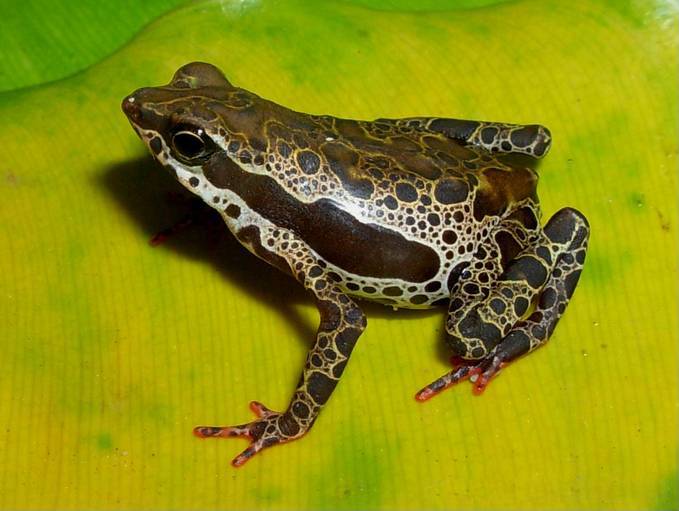
The defining trait reflected in their common name “stubfoot” lies within their shortened feet, making them instantly recognizable among amphibians. Yet, it’s their coloration that captivates most: an explosion of bright yellows, greens, oranges, and blacks intertwines on their backs, forming patterns unique to individuals—like fingerprints established by nature herself.
These dazzling hues are not mere decoration; rather, scientists attribute vivid coloration to aposematism—an adaptation warning predators of the potent toxins secreted through skin glands. Predators learn to associate these brilliant colors with bitter tastes or even discomfort, providing a deterrent ensuring the toad’s safety.
Behavior and Life Cycle: Harmony by Streambanks#
Life for an Amazonian harlequin toad unfolds in rhythmic harmony with seasonal rainfall and river flows of the rainforest. Being diurnal, individuals hop peacefully along leaf-strewn stream banks, actively hunting for insects, small arthropods, ants, and beetles they deftly catch with their sticky tongues.
Mating Rituals and Reproduction#
As the rains return annually, marking the arrival of breeding season, these streams hum with the distinctive chirping and trilling calls of males as they vie for female attention. Female toads move toward their chosen partner, and soon afterward, mating occurs as pairs descend into shallow streams. Females carefully deposit gelatinous egg clutches, attaching them to submerged vegetation or rocks within stream currents.
Within days, tadpoles emerge into their aquatic nursery. Life begins in earnest, with these larvae feeding eagerly on algae and biofilms, rapidly growing while avoiding aquatic predators. Their initial dependence on clean, unpolluted waters underscores why pristine stream habitats are non-negotiable for healthy populations.
Ecological Role: Critical Cogs in Amazonia’s Web of Life#
As both predator and prey, Atelopus spumarius embodies a delicate balance within its habitat. The amphibian diet helps regulate insect populations, maintaining these communities at healthy densities, indirectly affecting floral pollination and forest growth patterns.
Simultaneously, their abundant tadpole presence indicates excellent water quality, and populations of adult harlequin toads serve as valuable food sources for several predatory animals—birds, snakes, and even larger amphibians provide constant pressure that helps shape their evolutionary adaptations.
Threats and Conservation Status: Vulnerability Amid a Changing World#
Unfortunately, as stunning and ecologically crucial as Atelopus species are, they’re also among the most threatened amphibians worldwide. Global trends such as habitat destruction, deforestation, climate change, and increased agricultural expansion have drastically impacted their fragile stream habitats. Particular strains, such as the lethal chytrid fungus (Batrachochytrium dendrobatidis), present devastating threats to this delicate species.
Currently listed as Vulnerable by the International Union for Conservation of Nature (IUCN), Atelopus spumarius requires vigilant monitoring, protective legal frameworks, habitat conservation, and urgent research efforts to avoid further decline.
Cultural and Scientific Significance: Amphibian Ambassadors of Knowledge#
Throughout indigenous mythology and local cultures, brightly colored amphibians have often symbolized rain, renewal, fertility, or hidden knowledge—tokens from invisible worlds that thrive where moisture reigns. Scientifically, these amphibians hold promising biochemical clues in their skin toxins that researchers tirelessly explore for medical breakthroughs, including painkillers, antibiotics, anesthetics, and other pharmaceutical marvels.
Moreover, scientists widely consider Atelopus species vital “bio-indicators,” measuring environmental health and enabling conservationists to gauge ecosystem resilience amidst shifting climates and contaminants.
Conclusion: Join the Chorus for Conservation#
This remarkable Amazonian resident Atelopus spumarius, an irreplaceable jewel among Earth’s biodiversity treasures, demands both awe and focused advocacy from nature enthusiasts and protectors. Understanding its captivating beauty, unique biological adaptations, and ecological importance provides ample reason to preserve its existence.
To help maintain these intricate ecosystems upon which countless species depend, we must rally to champion diverse conservation initiatives—support scientific studies, responsible ecotourism, education programs, diligent habitat protection, and advocate robust environmental policies. Together, our diligent voices and conscious efforts can echo clearly alongside the gentle calls of Amazonia’s harlequin toads, safeguarding their existence for generations yet ahead.