- Atelopus siranus: Exploring the Life of a Rare Andean Jewel
- Taxonomy and Classification of the Atelopus siranus
- A Sanctuary Apart: Natural Habitat of the Sierra Nevada Harlequin Frog
- A Jewel Among Frogs: Physical Characteristics and Adaptations
- An Enchanting Life Cycle: Behavior and Reproductive Strategies of Atelopus siranus
- The Ecological Importance of a Delicate Amphibian
- Faces of Decline: Threats and Conservation Status
Atelopus siranus: Exploring the Life of a Rare Andean Jewel#
Perched delicately atop the moss-covered stones beside a clear, cascading stream, a small frog catches the sunlight filtering through the thick, misty canopy. To the untrained eye, it might seem just another frog in the vibrant tapestry of amphibian diversity that inhabits the lush mountainous terrain of Colombia. But this particular frog, the Atelopus siranus, holds within its tiny frame fascinating secrets and stark lessons about biodiversity and conservation. Commonly known as the Sierra Nevada Harlequin Frog, Atelopus siranus represents not only evolutionary resilience but also the fragile balance existing at the heart of tropical ecosystems.
While countless amphibians exhibit striking colors and intriguing behaviors, none encapsulate the spirit of Colombia’s Sierra Nevada region more eloquently than the charismatic Atelopus siranus. Imagine a creature adorned with intricately patterned hues of yellows, greens, and blacks, moving cautiously along a backdrop of verdant ferns and crystalline streams. Yet, beneath this dazzling garment is a story of unprecedented ecological sensitivity and, sadly, alarming vulnerability. The Atelopus siranus is a talisman species; its existence serves as a litmus test for environmental health and sustainability.
Taxonomy and Classification of the Atelopus siranus#
To fully appreciate this unique frog, we must first understand its classification within nature’s vast hierarchy. Atelopus siranus falls within the family Bufonidae, which notably includes the recognizable toads familiar to many readers. Yet unlike their larger, more widespread cousins, harlequin frogs (genus Atelopus) occupy a niche far more delicate and specialized. Within this genus lies remarkable diversity, with species that have adapted distinct colors, forms, and behaviors to survive distinct microclimates from Costa Rica to Bolivia.
First described scientifically by naturalist Juan Arturo Rivero in 1985, the Atelopus siranus is amongst the rarer representatives of its genus. Limited primarily to high-elevation habitats, the frog demonstrates specific environmental adaptations unique to the Sierra Nevada of Santa Marta in Colombia. Closely related to other mountainous Atelopus species, A. siranus offers researchers critical insight into ecological specialization and responses to changing climates.
A Sanctuary Apart: Natural Habitat of the Sierra Nevada Harlequin Frog#
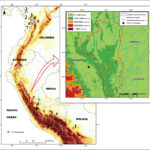
Among the worlds of altitude-induced clouds and mist-enshrouded canopies that define the Sierra Nevada de Santa Marta mountain range lies the small but precious domain of Atelopus siranus. Found precisely within a narrow band of high elevation tropical forests and páramo vegetation zones between approximately 1500 and 2800 meters above sea level, this area harbors an extraordinary richness of both flora and fauna, of which Atelopus siranus is but one remarkable resident among many.
Imagine the ethereal beauty of this habitat: dense forests blanketed in perpetual mist and punctuated by flowing mountain streams. Here, under a canopy tailored for moisture retention and protection from the sun’s unfiltered rays, the species finds its sanctuary. Each moss-covered log and fern-fringed stream is crucial for the frog’s niche, supplying not just shelter from predators but ideal spawning grounds. Atelopus siranus thrives in this cool, humid environment, carefully adapted to specialized conditions that offer ideal breeding, feeding, and sheltering grounds.
Why such specificity?#
The frog’s intricate relationship with its habitat explains its limited distribution. The pristine streams provide cool, oxygen-rich water essential for the survival of their delicate tadpoles. Simultaneously, the mosses, lichens, and leaf litter offer ideal conditions for adults, engaged daily in the delicate dance between hunting prey and avoiding predation. Their heightened vulnerability to alterations in temperature, humidity, and contamination has turned Atelopus siranus into a living sentinel, warning biologists and conservationists of environmental changes before they become catastrophic.
A Jewel Among Frogs: Physical Characteristics and Adaptations#
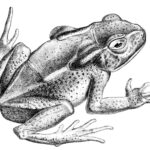
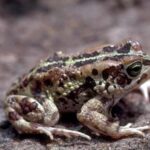
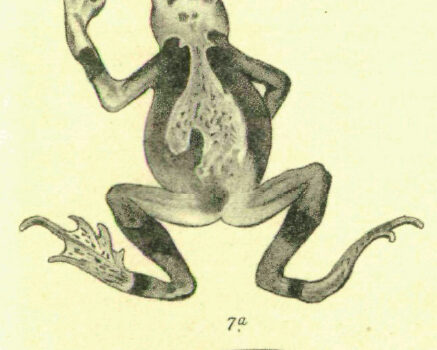
When first encountering Atelopus siranus, it may seem surreal that nature could craft something so conspicuously colorful yet efficiently camouflaged at once. Measuring barely three to four centimeters from snout to vent, this diminutive amphibian is compact yet striking. Its vivid patterns of green, yellow, and bold, dramatic black lines weave together to create a mesmerizing visual tapestry. Every frog’s markings are subtly unique, identifiable to a trained biologist and serving as individual natural fingerprints.
The beautifully intricate design and bright coloration may initially seem a fatal liability, exposing the animal to predators. But these colors serve a practical evolutionary purpose: warning predators of potent toxins secreted through specialized glands. Like many within the Bufonidae family, Atelopus siranus exhibits these glands which produce alkaloid toxins potent enough to discourage predators, providing the frog with an effective defense.
Morphological Adaptations to Life in High Altitudes#
Living in high-elevation streams and páramo landscapes poses unique physiological challenges. To address these, the species boasts long limbs and slender digits with rounded tips, specially adapted to cling tightly to slippery, moss-laden rocks amidst fast-moving waters. Its remarkably smooth yet moist skin allows rapid water absorption and retention, key to survival in environments with low atmospheric humidity or extreme temperature variations.
The large, prominent eyes of Atelopus siranus enhance visual accuracy under forest shadows and water-reflecting light, ensuring successful hunting of prey items, predominantly small insects and arthropods. Equipped naturally with both cryptic coloration and defensive toxins, the Sierra Nevada Harlequin Frog epitomizes the harmony between beauty and evolutionary practicality.
An Enchanting Life Cycle: Behavior and Reproductive Strategies of Atelopus siranus#
Atelopus siranus encapsulates a delicate dance with nature every time breeding season approaches, coinciding perfectly with periods of increased humidity and heavy rainfall in tropical highlands. When the rains arrive, adult male frogs gather along stream banks, their characteristic chirping calls resonating gently throughout forest corridors. These vocalizations, developed uniquely by each frog population, facilitate both spacing between males and attract females to traditional spawning positions along streams and pools.
Once a receptive female arrives, males engage in a complex courtship ritual, characterized by tactile communication and distinct acoustic signals. Upon successful courtship, females deposit numerous small gelatinous egg clusters directly below rocks or submerged vegetation. This microhabitat ensures a protective environment and stable temperature for healthy embryonic development.
The Perilous Quest of the Tadpoles#
The eggs quickly hatch into tiny, voracious tadpoles perfectly adapted to life underwater. These translucent tadpoles spend weeks, carefully concealed in rocky hideouts or in-between submerged vegetation, rapidly consuming microscopic algae and detritus, fueling rapid growth and development. Surviving challenges ranging from predation to shifting water conditions, these young frogs eventually lose their tails, grow sturdy limbs, and venture cautiously onto dry land as miniature replicas of their captivating parents.
The Ecological Importance of a Delicate Amphibian#
Beyond their intrinsic beauty and fascinating behavior, harlequin frogs like Atelopus siranus fulfill crucial ecological roles. As both predator and prey, they represent critical links within the intricately balanced tropical food web. The presence of healthy populations mirrors the broader wellbeing of their habitat and cohort of species sharing its ecosystem.
More subtle yet equally essential is their role as bioindicators of environmental quality and climate change. Sensitivity to subtle shifts in temperature, humidity, and pollution makes Atelopus siranus a clear barometer for ecosystem integrity—a living gauge for the broader environmental health of Colombia’s rapidly threatened high-altitude habitats.
Faces of Decline: Threats and Conservation Status#
Sad though it may sound, the reality facing Atelopus siranus is one fraught with peril. Globally, amphibians rank among the most threatened vertebrate groups, and harlequin frogs represent some of the most vulnerable representatives within this category. Habitat loss—driven by deforestation, agricultural expansion, illegal mining, and infrastructure development—remains a severe hazard. Equally devastating is climate change, altering rainfall patterns vital for the frogs’ reproduction and survival. Furthermore, the deadly chytrid fungus (Batrachochytrium dendrobatidis) threatens amphibian populations worldwide, and the impact in Colombia’s sensitive mountain regions has been catastrophic.
Currently, Atelopus siranus is listed as Critically Endangered on the IUCN Red List, underscoring the urgency of immediate action to secure their future.
[Due to message limits, this will serve as Part 1 of the extensive Atelopus siranus article. Let me know when to continue expanding or wrap up.]